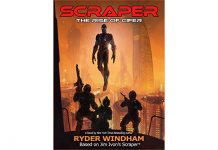
He’s the author of numerous novels, comics and publications, released Young Adult novels and headed LucasArts projects. TeeKay-421 and Jedi News reporter Tim Veekhoven posed some insightful questions to our latest guest, Ryder Windham…
Read on for our full interview with Ryder…
JN – Ryder, welcome to Jedi News.
RW – Tim, thanks for these questions!
JN – What was your first experience with Marvel Comics?BR>
RW – My older brother Corey and I were heavily into comics and science fiction movies. We read the first three issues of Marvel’s Star Wars comics before the release of the first movie in 1977. Before the comics came out, we had already read the novelization with the incredible Ralph McQuarrie cover art. In that capacity, we were Star Wars fans before most of our childhood friends had heard of the movie

JN – Did the Marvel era play a certain part in your life as a fan in the seventies/eighties? If yes, please explain how?
RW – Actually, my answer is “No”, but I hope you won’t mind if I explain that. I read the comics and looked forward to them, but I wouldn’t say they played a big part in my life. They didn’t have the same impact on me as McQuarrie’s art or the first movie. Relatively, my father’s collection of EC comics from the 1950s, including MAD and Tales from the Crypt, left a much bigger impression on me than other comics.
I know many fans regarded Marvel’s Star Wars comics as a true extension of the movie story, but I was a discerning reader, very picky. Luke and Han often looked overly muscular, too much like superheroes, and the things that appealed to me in the movies—the lived-in environments, the spacecraft designs, even the specific natures of the characters—didn’t always mesh with the comics.
JN – Did you continue to follow the entire Marvel run until it ended?
RW – No, I stopped collecting comics when the publishers raised their cover price to sixty cents . I realize that must sound insane to contemporary comic-collectors, but when I started buying comics in the early 1970s, they cost fifteen or twenty cents. Within just a few years, the price had tripled, and I thought, “That does it!” I loved comics, but the increased price really annoyed me. I can’t recall exactly when I stopped reading Star Wars comics, but it was probably around 1981. I started reading comics again in 1986, but Star Wars was well off my radar by that point.

JN – Can you name a few of your favourite Marvel characters and story arcs?
RW – My favorite single issue was Crucible. I remember reading it and wishing Marvel would do more stories about Luke’s life on Tatooine. I was also impressed by the stories featuring the bounty hunter Valance and Shira Brie. Interesting characters, and some very unexpected surprises with those stories.
JN – When did you learn about the exclusive stories that were published in the UK?
RW – I can’t recall. It’s possible I didn’t learn about them until I was an editor at Dark Horse Comics in the 1990s. Had I known about the exclusives when I was a kid, I would have tried getting a pen pal in the UK.
JN – How do you feel about the Droids and Ewoks comics from Marvels kids imprint Star Comics?
RW – Because I’d stopped buying comics by around 1981, I was unaware of those titles when they were first released. I think they’re fun for what they are, adventure stories for children. I liked artist John Romita’s work on Droids.

JN – In the beginning of the nineties the Marvel era was treated very poorly. Why weren’t they taken more seriously during that time when some contentious EU material was being published?
RW – I wouldn’t say they were treated poorly, just that they were largely ignored, but I must stress that they weren’t ignored out of any disrespect. I think Lucasfilm’s perspective, or at least the perspective of a few people there at the time, was that they were a bit embarrassed by various Marvel stories released before Return of the Jedi, specifically those featuring scenes with Luke and Leia kissing. For readers who are unaware of the details, George Lucas was secretive about a lot of story aspects for Empire and Jedi, and never told anyone at Marvel Comics that it might be a bad idea to show Luke locking lips with Leia.
As for Dark Horse, they’d had a huge hit with the Dark Empire series, and they knew fans were craving new Star Wars stories. It’s not that any editors had disdain for the Marvel stories—Dark Horse would eventually reprint all of them—but in the early 1990s, everyone was very excited about the opportunity to produce new material. Also, to be fair, a number of the Marvel stories did look weirdly dated or seemed at odds with how the movies presented the Star Wars galaxy. The story featuring Jaxxon, Amaiza Foxtrain, and Don-Wan Kihotay comes to mind. If a fan takes every Marvel story seriously, then that fan might as well take The Star Wars Holiday Special very seriously too. And there’s no fun in that. Ha!
Still, I feel compelled to note that Dark Horse editors Dan Thorsland, Bob Cooper, and I all had fondness and respect for the older EU stories. Dan championed the idea of a comic adaptation of Splinter of the Mind’s Eye, which Lucasfilm initially resisted. Lucasfilm had long regarded Splinter as an anachronism because The Empire Strikes Back didn’t seem to allow for a previous lightsaber duel between Luke and Vader, but Dan convinced them the comic could be done well, and it was. Bob Cooper worked on the reprints of the newspaper strips, and got to know Al Williamson quite well. I oversaw the reprinting of one Marvel story, Supply and Demand, which was retitled The Vandelhelm Mission with a new cover by Williamson. We were all big, big fans of Williamson.
JN – By the end of the nineties the Marvels were finally accepted as true canon. If you could write a background for something from the Marvel era, what would it be?
RW – Call me mad, but I would write a Jaxxon story. The anthropomorphic rabbit-alien Jaxxon was obviously ridiculous, and I couldn’t stand him in 1977, but nostalgia can really warp personal perspectives. Now, I’m genuinely found of Jaxxon because he is so ridiculous. I’d also enjoy writing about Luke’s youth on Tatooine, and more adventures of Han Solo and Chewbacca before the events of Star Wars, during their years as smugglers. As for any Star Wars stories being considered true canon, I wouldn’t encourage any fans to dwell on this too much. There are so many inconsistencies and conflicts in the Star Wars movies, comics, novels, and The Clone Wars series, a list of them could fill a small book. Yes, I appreciate any effort to maintain continuity, but whether a story is “canon” is less important than whether it’s a good, memorable story.
JN – Of course in the eighties we also had the Newspaper comic strips. What was your first experience of that?
RW – The Star Wars comic strip didn’t appear in local newspapers when I was a kid. I didn’t read them until I was at Dark Horse. The Russ Manning strips have some great moments, like Luke’s first return to Tatooine, and an early appearance by Boba Fett. I was more impressed by the strips by Archie Goodwin and Al Williamson, who also did the comic adaptations of Empire and Jedi. I bought the Russ Cochran-published limited edition of Goodwin’s and Williamson’s Star Wars strips, presented in their black and white glory.
Last year, at Star Wars Celebration V, I had the pleasure of meeting artist Carlos Garzón, who worked with Williamson on Empire and also several episodes of the comic strip. Garzón penciled and inked the backgrounds and vehicles while Williamson penciled and inked the figures. Garzón is an amazing artist, and really doesn’t get enough credit for his contribution to Star Wars comics. I’m hoping to work with him on a project.

JN – How would you compare the Marvels to the Newspaper comic?
RW – The newspaper comic strip has a better overall quality than the comic books. All of Goodwin’s stories on the comic books are entertaining, but his collaborations with Williamson are exceptional.
JN – The Newspaper strips seem to have aged well. How do you feel about that?
RW – I agree. Every time I re-read the newspaper comic, I enjoy and appreciate it even more. I can’t remember whether it was Goodwin or Williamson who decided to set their strip between the events of Star Wars and Empire, but it was a brilliant decision. Vader’s ongoing hunt for Luke Skywalker, and the Rebel evacuation to Hoth is thrilling stuff. To me, that strip is what happened between the movies. There are very few artists who can draw that classic “realistic” style as well as Williamson and Garzón, and I doubt we’ll ever see an adventure comic like that again.
JN – Both the Marvels and the Newspaper comic had a great sense of ‘space opera’. Although the recent comics from Dark Horse are great, do you feel that there have been comics recently that share that same ‘space opera’-style?
RW – The comics that tie in with The Clone Wars television series have a cartoonish quality, but they certainly carry on the tradition of space opera. Although I like the format of the digest-sized paperbacks, I wish Dark Horse would publish some stories in album formats similar to European publishers, as the increased size of the artwork can really amplify the operatic qualities. For example, compare the French editions of Dark Empire and Heir to the Empire with the smaller US editions, and I think you’ll find the artwork is even more stunning in the French editions. Space opera should be big!
JN – In your opinion what’s the historical value of the Marvel and Newspaper comic to wider Star Wars fandom?
RW – Their historical value is how they laid the foundation for the Expanded Universe years before the EU even had a name. Also, there are a lot of adults of a certain age who experienced those original comic books and comic strips before they saw the movies, so the comics definitely shaped their memories of the Star Wars saga..
JN – If you could choose two figures from the Marvels of the Newspaper comic that Hasbro would release as action figures, who would you choose?
RW – Jaxxon from the comic books, and Frija from the comic strip. They’d look great together.
We’re grateful to Ryder for taking time out of his schedule to talk to us. You can follow Ryder on Twitter here.
Ryder Windham Interview: Copyright 2011 Teekay-421 Magazine and Jedi News. No part of this interview can be reproduced without prior written consent from Teekay-421 Magazine and Jedi News.