Released: April 23, 1996
Composer: Joel McNeely
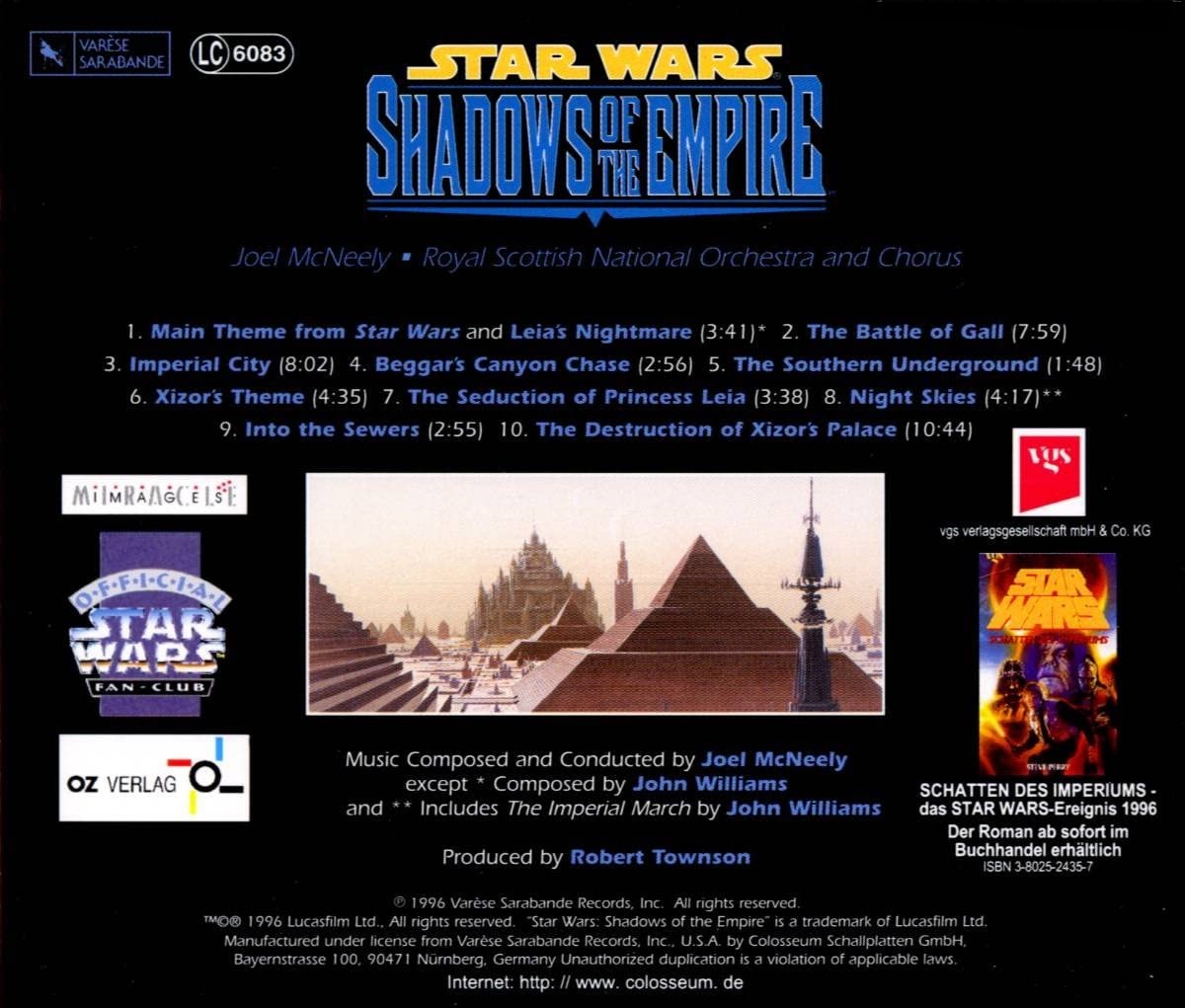
Performed by: Royal Scottish National Orchestra and Chorus
Recording Label: Varèse Sarabande Records
Formats: CD, Cassette, Vinyl
Track Lisitng: 1. Main Theme from Star Wars and Leia’s Nightmare (3:41); 2. The Battle of Gall (7:59); 3. Imperial City (8:02); 4. Beggar’s Canyon Chase (2:56); 5. The Southern Underground (1:48); 6. Xizor’s Theme (4:35); 7. The Seduction of Princess Leia (3:38); 8. Night Skies (4:17); 9. Into the Sewers (2:55); 10. The Destruction of Xizor’s Palace (10:44)
Running Time: 51:27
Cover Artist: Drew Struzan
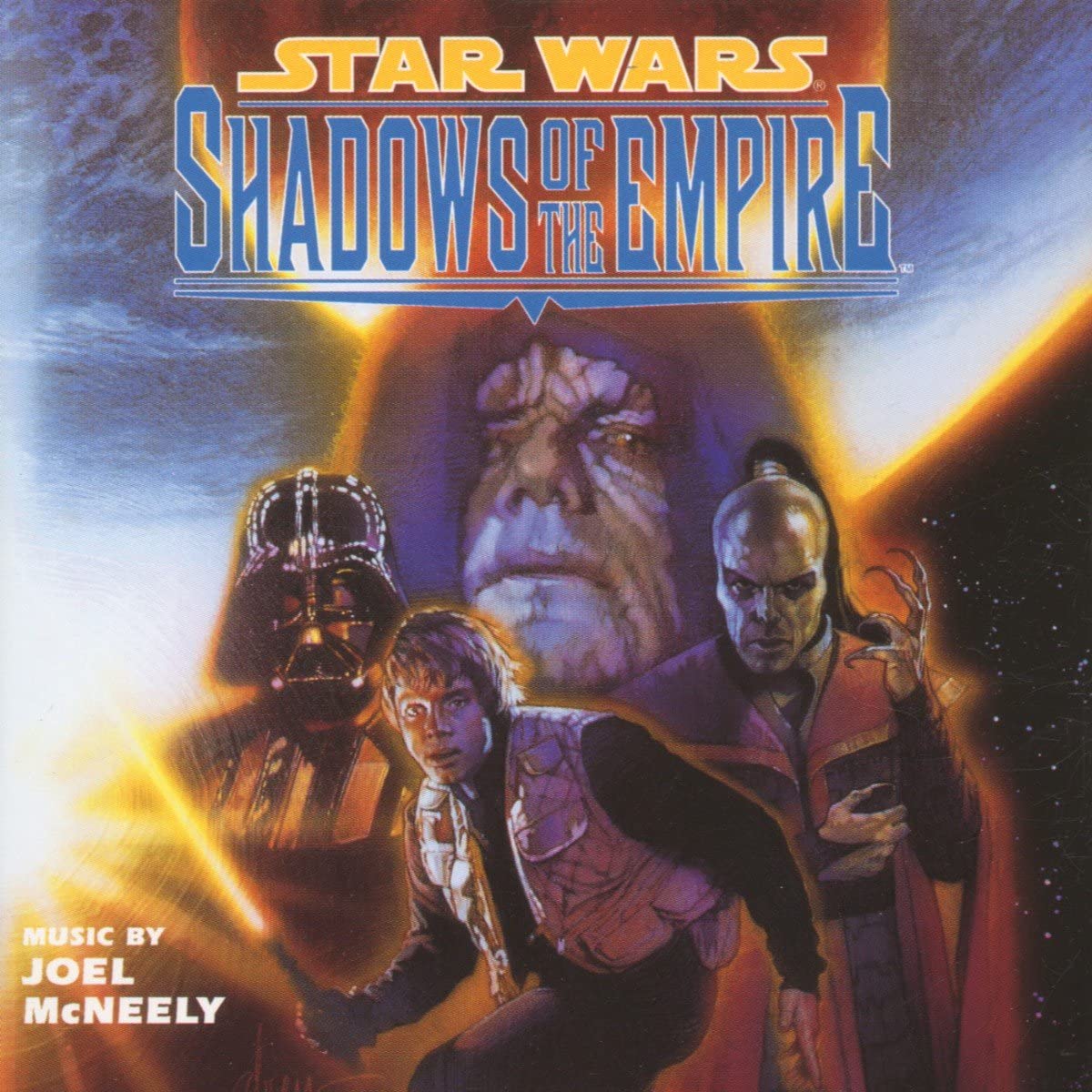
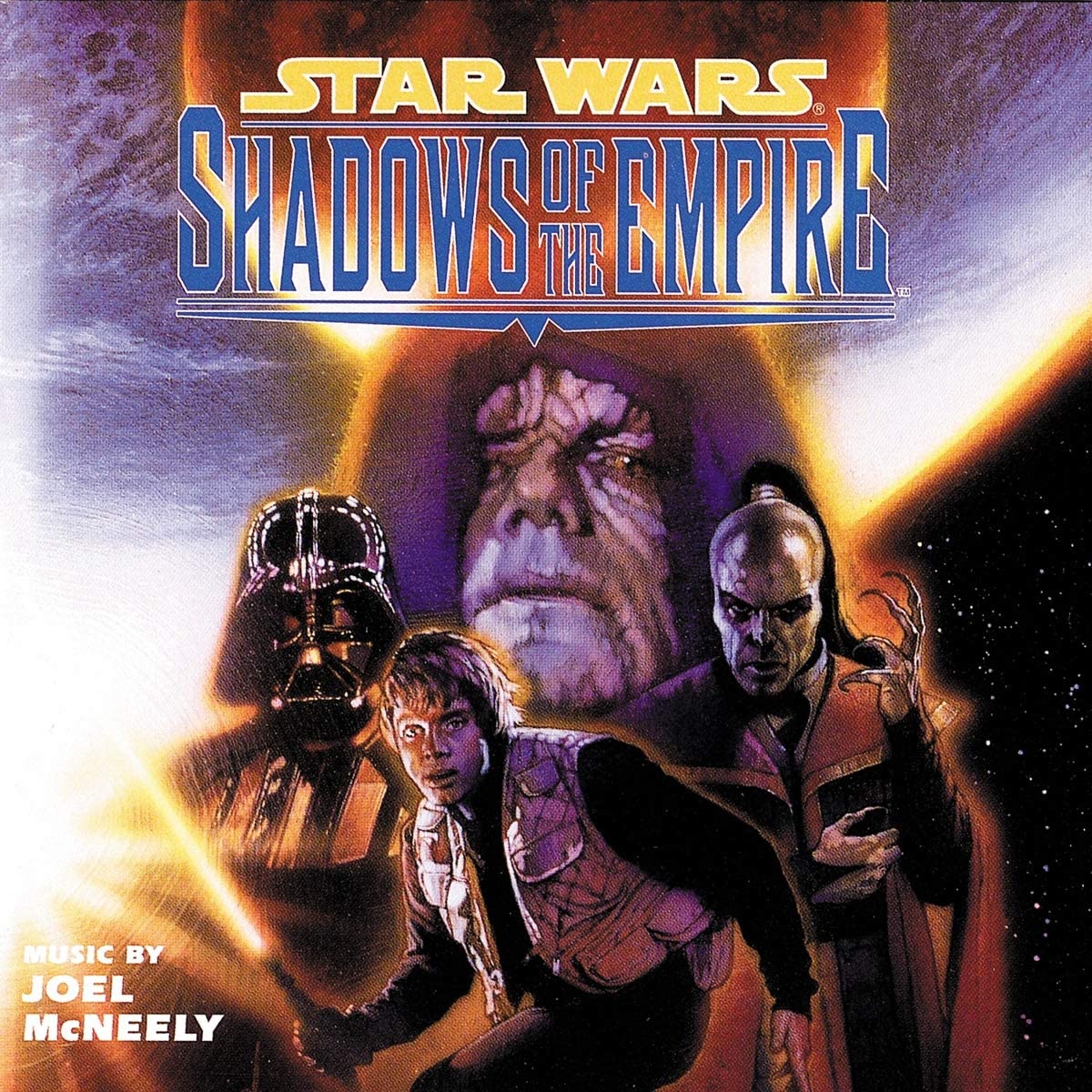
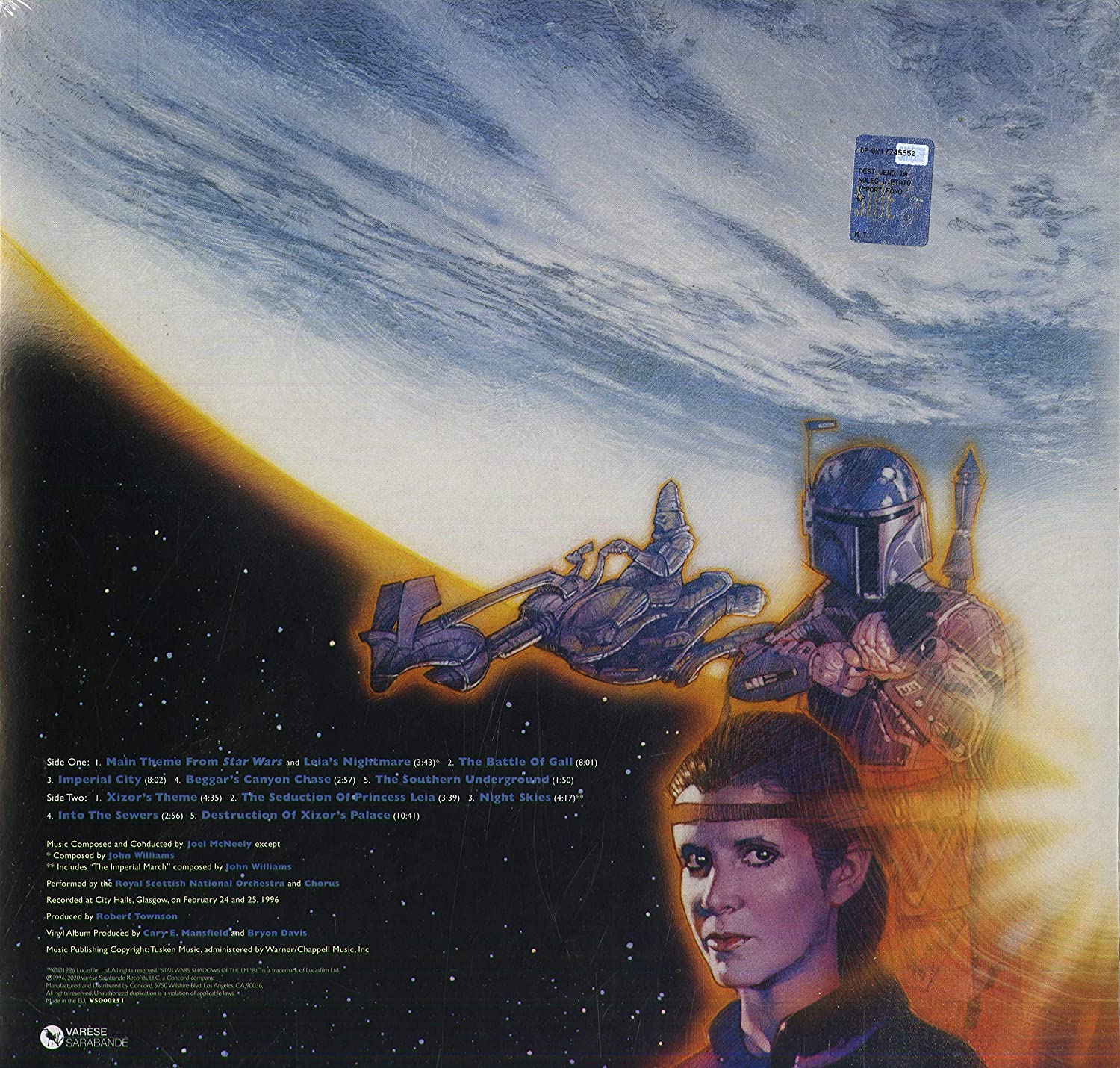
A movie release without the movie. It was the phrase that was used time and time again to describe the huge campaign that was Shadows of the Empire. It was a project that was like no other and is remembered by fans very fondly to this day. Amongst my collection is a CD soundtrack for the project by Joel McNeely. It came into my possession only a few years ago, and I was thinking how have I not heard this before? I put it into my CD player to quickly find that these tracks were well known to me. For this soundtrack was to be found in the game (which I played extensively) and on the audiobook (which I seemed to listen to again and again).
This is not John Williams music, this is Joel McNeely, who had the incredibly difficult job of having to create the first soundtrack that would be released outside of John Williams for Star Wars (well unless you count Christmas in the Stars). It is not even the London Symphony Orchestra, but the Royal Scottish National Orchestra and Chorus. To say the pressure must have been on McNeely is an understatement. This is not someone who had visuals to help the music become cemented in Star Wars, this was a soundtrack that had to harken back to the original trilogy, to the music fans had always known, while creating something new and exciting at the same time. The music also had to create images in our head, images that we had never seen, that would have to create an emotional response. If you look at the works that would have come before that used music, namely computer games, this used John Williams’ music. This was a huge leap for Star Wars and convincing fans that someone else could create music for Star Wars.
So today I’m going to explore and review the ten-track soundtrack, twenty-five years later. Now I do not profess to being a music expert but simply a lover of music. So, as I fire up my Rotel cd player, my NAD amp and Mordaunt Short speakers, I hope you will join me on a McNeely’s journey into Shadows of the Empire….
The first track is the ‘Main Theme from Star Wars’ and ‘Leia’s Nightmare.’ Of course, you can’t have a Star Wars soundtrack without William’s iconic theme. What I will say, is that the Scottish National Orchestra do an incredible job. The subtle sound of bells in the background and the sheer weight of the instruments create a real depth to the piece which I felt is missing from the sequel trilogy soundtracks. As the track moves into Leia’s Nightmare, the McNeely uses themes from The Empire Strikes Back, filling fans with that nostalgic trip back to the film. As JJ Abrams has said with The Force Awakens, you have to go back before you can forward. McNeely does this, he brings our ears back to the familiar before we move forward. It allows McNeely to remind fans where we left things with Han being captured and lost.
McNeely does not dwell on the older sounds before moving straight on to track two, ‘The Battle of Gall.’ There are subtle nods in musical cues back to Williams, but McNeely is in full control. The sound is familiar yet new at the same time; it is most definitely Star Wars. You can feel the buildup of something upcoming and an almost playfulness to the music, before the pace of the piece increases, letting us know we are in the middle of a full battle. The brass side of the orchestra and the flutes play a huge role, as they always have in Star Wars. McNeely has to paint this image for you of dog fights, of x-wings flying over Gall and I think he creates it very well. There are slower parts interspersed with this, moments before battle and during the battle, that remind me greatly of the way ‘The Battle of Yavin’ was constructed by Williams. McNeely is constantly having to walk this thin line of creating new music while using the old to help push our imagination to where it needs to go. He uses Williams’s formula as a way of creating that mental image of a battle with the correct ships present.
The soundtrack then moves to ‘Imperial City.’ This is at a time before the prequels, where the only images we’d seen of Coruscant had been Ralph McQuarrie’s artwork for Return of the Jedi and descriptions in the Legends timeline. The soundtrack starts very slowly, almost intimately, reminding me very much of the first Alien soundtrack. Very few instruments are used here to help create the illusion we are in space. We also hear for the first time, the choir. The way this is constructed reminds me very much of ‘Yoda teaching the Younglings’ from Attack of the Clones. Remember this is composed by McNeely long before the prequels. He then moves the piece, with us descending from space to the planet. The brass come out to provide a very royal feel, of a place of importance, while the choir change from an almost angelic quality to a feeling of fear and respect. There is this grand atmosphere that McNeely creates that really makes you sit up. Again, there are hints of the prequel soundtracks here, particularly of the start of the pod racing in The Phantom Menace. I would love to know if this soundtrack influenced Williams, or if McNeely was able to really create that Williams feel so well. As the track progresses, you can imagine yourself flying through the buildings of Imperial City and marveling at the wonder it is. For although there is a lot to be feared, there is also a lot to make you impressed. This is one of the longest tracks on the album and it is also one of my favourites. I can’t help but think if this had been used in the prequels…
We leave Imperial City and head to Tatooine for ‘Beggar’s Canyon Chase’. For anyone who has played the game, this should take you right back to the swoop bike level. The intensity of the music straight from the very opening, is one that is loud, weaving, and full of danger. Now of course I’m a little biased, as having played the game, the imagery is there for me, but I do feel the music creates the atmosphere of the bikes very well. You can feel your heart beating just a bit faster in line with the music. The track ends with a sense of victory in true Star Wars fashion.
‘The Southern Underground’ is the shortest of the tracks and has a very different feel. McNeely says that the whole point of this piece was to take you out of the zone you know as the environment is supposed to be quite different. He succeeds here but it never feels out of place.
Possibly the most important track for McNeely was ‘Xizor’s Theme’. This is the villain of the book and as such McNeely has to make sure that we know that this is someone not to trust. You can hear the difference in style that lets listeners know that this is someone new to the galaxy. The chorus harkens back to the ‘Imperial City’ track, letting us know that in some way, this character is linked to that place. The base tones of this track really come through; you can’t help but feel that this new character is very dangerous. There is a middle eastern theme that runs in the second half of the track, the rattling that is repeated several times, bringing images of a snake or reptile. In an actual film, McNeely might not have to had to use something so obvious, but for a soundtrack with no images, McNeely uses these well-known sounds to create the perfect image of the type of character Xizor is.
The pace changes once again for ‘The Seduction of Princess Leia’. This is a classical ball theme that one can imagine being played several hundred years ago. It serves extremely well for what is happening to Leia when she is in the presence of Xizor. The buildup of the track is wonderful. Is it typical Star Wars? No, but as in the previous track, McNeely has to rely on these themes and styles to help create the image he needs in our heads. I don’t for one minute, think this would be used in a film, as I think McNeely would have a far more subtle approach. Given the context of what McNeely needs to do, this is very much needed. You can hear just how powerless Leia is, that the more she tries to turn away, the more Xizor chases.
McNeely brings the new and the old together for ‘Night Skies’. The chorus is used again to create this mood of reflection and to link us to our villains through ‘Imperial City’. McNeely intertwines Xizor’s theme and Vader’s theme but plays them a lot softer and slower, a quiet moment for the characters. To hear the ‘Imperial March’ coming through is wonderful, it’s a moment that listeners will smile as McNeely brings the William’s track back. The themes sound very different, but it is not one that alienates but encompasses the characters into the track. It is this track that really show what McNeely can do with both his work and Williams. The culmination at the end of the track with the familiar themes will send goosebumps up your arm. For me, this is one of the best, if not the best track on the album.
The penultimate track, ‘Into the Sewers’, well the track says it all. The track really creates that unpleasantness and there are echoes here of themes from Jabba’s Palace. You can feel the slow trudge that the characters are having to take, moving through goodness knows what.
The final track is also the longest, ‘The Destruction of Xizior’s Palace’. This piece is the culmination of all before. Like all great finales, it begins quietly, the choir once again back to remind us where we are. The track then begins to build with a wonderful array of different instruments that sound fantastic as they come through the speakers. The pace then jumps again as the battle begins. This is clearly Star Wars, the instruments used, the pacing that McNeely goes for, it all feels right at home in a galaxy far, far away. The themes that have been introduced in this album all come together beautifully, particularly ‘Imperial City’ and ‘Xizor’s theme’. It is hard not to think of ‘A Duel of Fates’ when listening to this piece, as when the choir enters during the battle is uncannily similar. I remind you again, this is before the prequel trilogy was even being filmed! Williams’ work makes a small appearance and is sued just right, almost a nod to the originals while celebrating this new music. It is a worthy send off for the soundtrack.
One could call it an impossible task. These days, we are used to others creating Star Wars soundtracks for movies and television shows. Back in the nineties? I think fans would be a little dubious to say the least. Yet McNeely walks the fine line set very, very well. He doesn’t ignore the legacy left by Williams, but neither is he imprisoned by it, afraid to step forward with his own ideas. The subtle blending of the two is done extremely well, McNeely using Williams when needed but also creating new and exciting themes that fit well into the Star Wars universe. There are those tracks that might feel out of place, such as ‘The Seduction of Princess Leia’ but McNeely has to rely on real world influences to help create the emotions and imagery associated with these to help guide the listener on this story. That is not to say that the tracks feel out of place in the soundtrack itself, they al form perfectly to tell this story. There are a lot of times where I’m reminded of the work Williams did on the prequels and I find it very interesting that that should be the case. As previously said, I would love to know whether McNeely could replicate Williams’ style well or that Williams’ himself took some inspiration from this album. The Royal Scottish National Orchestra and Chorus do an incredible job of playing the music for this album. I have never been fond of others coming in to play Star Wars, the sequel trilogy feeling like it had lost something, some warmth to the overall pieces. Yet here, that warmth, that depth is most certainly there. The already familiar themes sound better than ever, and the new themes sound superb.
This is a worthy addition to the sounds of Star Wars. If you want to hear what Star Wars sounded like during the dark times, to hear new sounds that still sound familiar, then this is certainly worth a listen. However, for me, the biggest thrill to this soundtrack is the memories it brings back of listening to audiobooks, of playing the game again and again and getting caught up in the wonderful event that was Shadows of the Empire. Although this soundtrack doesn’t sound dated in the slightest (and could easily be used in a movie adaption – just saying), it will always remind me of my ten-year-old self, living, what was at the time, the Star Wars dream…