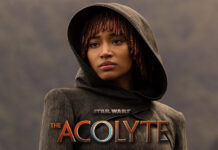
For fans that wondered what Leslye Headland will bring to Star Wars, The A.V. Club went straight to the source, talking with Headland about her gateway to Jedi geekery, vocal fanbases, and the power in making Star Wars your own.
The A.V. Club: You’re the first female showrunner for a Star Wars show, which is a huge development. What was your introduction to that world?
Leslye Headland: My relationship with Star Wars probably runs the span of most of my life, and it has changed over the decades. When I was younger, I devoured the films on home video and absolutely loved them—just a deep connection to the original trilogy. When I was in middle school, I read some novels, like Timothy Zahn’s Heir To The Empire, and also got into it that way. Then when I was a teenager, I moved from Maryland to Connecticut, and that’s right when the re-releases came out. So I really had this huge change in my life, both just being a teenage girl—which in and of itself is a nightmare—but then also this big geographical change.
Star Wars was this anchoring thing that made me happy, which led to me incorporating it into a lot of my writing when I was little. I guess now you would call it fan fiction. But back in my day, I wasn’t allowed to go on LiveJournal and whatever was up at the time. So I was just writing it myself, and it was this beautiful way to escape what was going on in my life. And I absolutely adored it. I loved every aspect of it, from the world-building and Ralph McQuarrie’s production design to the hero’s journey of it all—Luke’s arc and what that meant. The image that always hits me is from Return Of The Jedi, when Luke is calling out to his father and Vader is looking back and forth between the emperor and his son, and you can’t see his face. Even to this day, I get chills thinking about it. It had this huge effect on me.
I enjoyed the prequels but didn’t feel the same kind of kinship to them as I did the original trilogy. I was older. I was moving into college and getting into theater. I was moving in this different direction. But with the advent of YouTube videos and their discourse around Star Wars, I started to get back into it, whether it was critiques of the prequels or recaps of things, or just kind of this digestible fandom that I didn’t realize existed. In my late 20s, early 30s, that’s when I started to go, “Well, I’m going to go check out this other stuff.” It was very interesting to kind of come back to Star Wars through a fandom perspective, as opposed to just through the content. People were kind of putting the content into context for me, and I just got back into it as a result.
AVC: When you have such a long history with something, be it books or movies or TV, you can get possessive of it. But Star Wars is something that’s enjoyed by so many people, and there’s this really, shall we say, passionate fanbase. Is that one of the more challenging things about entering this universe as a creator? Or do you embrace the idea of engaging with the fandom?
LH: Yeah, but I would say I do it passively—meaning, I really enjoy watching what people put together, whether it’s videos or memes. The participation of Star Wars fans in social media is something that just makes me excited. I don’t know how else to put it. It just makes me feel like everybody’s got their own thing that they love about Star Wars.
To me, Star Wars has always been a little bit of a Rorschach test of a piece of art. A lot of times it is what you decide is. I think The Matrix is a really good example of that as well. You have fans that really run the gamut, in terms of their political and social identities, and yet it’s still a piece of art that really speaks to people on a very base level. So to me, seeing a fandom as passionate as Star Wars, it’s certainly intimidating, but it’s also understandable, because it’s a great work of art. And to be a part of it is—yeah, it’s daunting, but it’s also something that, if I didn’t feel passionate about my love for it, then possibly it would be something that was too frustrating or scary. But because I feel so passionate about it, I know that my love of it is rooted in a strong point of view.
AVC: For as long as there has been Star Wars, there have been LGBTQ+ fans and people of color embracing it. I know I was excited to learn that you were going to be the showrunner for The Acolyte. When you have queer people making anything, it creates a certain anticipation for more meaningful representation. How do you balance making your story more inclusive, while also just kind of keeping in mind the considerable history involved?
LH: Well, I love that interview that Mark Hamill [did], where he says, “If Luke is gay to you, then of course he’s gay.” That’s such a strong, beautiful thing for him to say. I mean, I use the example of The Matrix as well. Neo is a character that, if you’re going through an experience of coming out or transitioning, that is a character that 100% appeals to you, and you can completely track that journey in a way. The confirmation of his status is something that is less important in my opinion, in the first film, because it’s trying to reach the audience at a level that’s almost subconscious or unconscious, which I think is something very important with fairy tales.
You have to feel like this is speaking directly to you, regardless of what you might be going through, at what point in your life you’re going through it. That being said, as somebody that is a lesbian, every time I see gay or queer representation in media, I scream with happiness. There is just nothing like seeing that out in the world. I literally was behind two mothers with their children at the airport and I was crying. It is so unusual to see it. And as someone that was raised very religiously and very heteronormatively, I mean, I could almost get emotional talking about it now.
To have the power, when you’re creating media, to just put in certain types of people that maybe aren’t necessarily in normal mainstream content or media is just… I know that for people who don’t identify that way, it doesn’t seem that important, but to us, it’s huge. I literally saw an Orbitz commercial with two women going on vacation, and I was like, again, crying. It just hits you on a level that you don’t know you’re missing it until you see it. My wife tells this very famous story of when Ellen [DeGeneres] came out on her sitcom way back in the ’90s. When she saw that she was like, “Oh, I’m gay. That’s what I am. Until I saw it, I didn’t realize that’s who I was.” I didn’t see a lot of media like that and so I didn’t come out until much later in life. But when I look back at the way that I consumed Star Wars and the types of characters that I gravitated toward and wrote fan fiction about or identified with, could they be seen as gay or queer characters? Probably. I mean, one of the things we did in our writers’ room to kind of break the ice was ask who’s your favorite Star Wars character? And you could tell that people, when I said mine, they were like, “Yeah, well, you’re gay. That’s because you’re gay.” But it’s true.
It’s a beautiful conversation to be having. Sometimes people think that representation just completely within media—meaning within the story—makes up for representation behind the camera, and that’s, to me, even more important. Like I said, media representation is wildly important, but there’s also this kind of nuanced conversation that I wish more people were having about people behind the camera, and behind the scenes. Because I think that’s really where you see real change occur, and the real seismic shift in culture.
Read the interview in full here.