Artists from ILM’s London studio, including visual effects supervisor Steve Moncur, animation supervisor Stafford Lawrence, and CG supervisors Christian Waite and Elizabeth Mitchell, discuss their team’s work on The Dinosaurs Netflix series.
The Dinosaurs (2026), the follow-up to Netflix’s 2023 series Life On Our Planet, takes us on a journey through time, back 66 million years to a momentous happening in global history, when the Cretaceous–Paleogene extinction event saw a nine-mile-wide asteroid travelling at 45,000 miles per hour smash into the Gulf of Mexico’s Yucatán Peninsula, creating a crater 120 miles in diameter and releasing more than a billion times the energy of the atomic bombings of Hiroshima and Nagasaki, wiping out over 75% of all animal and marine species on Earth.
Across four gripping episodes of The Dinosaurs, we journey even further back in time, from the asteroid strike to the distant Triassic Period, 235 million years ago, and on into the Jurassic and Cretaceous Periods, where the great dinosaurs ruled the oceans, lands, and skies of our planet.
To bring these majestic creatures to life, Industrial Light & Magic returned for The Dinosaurs after their work on Life On Our Planet, bringing not only their skills in visual effects and creature creation to bear (not to mention decades of experience with the genetically-altered creations of Jurassic Park) but also a desire to depict these iconic animals as accurately as possible, utilizing the latest techniques and scientific knowledge, all in collaboration with advisors spanning the world of paleontology.
ILM.com was fortunate enough to sit down with four members of the ILM team – visual effects supervisor Steve Moncur, animation supervisor Stafford Lawrence, and CG supervisors Christian Waite and Elizabeth Mitchell – to discuss the making of this incredible and dramatic journey back in time, one that began during a crucial moment in our own history – the global coronavirus pandemic of 2020.
“Jonathan Privett, who was the visual effects supervisor on Life On Our Planet (aka Loop 1), had a break from shooting through COVID, which put the brakes on rolling from Loop 1 into The Dinosaurs (aka Loop 2),” explains Steve Moncur. “Once that had resolved itself, Jonathan was able to fly to locations to film more freely, but Netflix sought to reduce the shoot and post schedule because Loop 1 ended up taking almost three years due to the global pandemic. They wanted the next one to be done and dusted in around half that time.”
That decision saw Moncur brought on board to help facilitate the compressed schedule, bringing his decades of visual effects experience to the project. “They needed someone to be the at-home supervisor to support the team in the UK, getting all the assets ready while Jonathan was away filming. That meant I could do the UK shoot while he was doing the foreign shoot, which was a necessity of the time frame.”
With a quartet of directors – including Nick Shoolingin-Jordan, Jolyon Sutcliffe, Amber Cherry Eames, and Darren Williams – splitting their time between UK and international shoots (travelling the globe to Canada, the United States, Iceland, the Seychelles, South Africa, New Zealand, China, Dominica, the Canary Islands, and Jordan), and two visual effects supervisors at home and abroad, the production was able to capture the material they required.
“It helped that Jonathan and I have known each other for many, many years, so we already had a shorthand,” says Moncur. “But it also meant that I could be there to support Elizabeth. She was then able to bring me up to speed on everything that had happened in the first series and teach me all the dinosaur names, which was super useful.”
CG supervisor Elizabeth Mitchell, a veteran of Life On Our Planet, picks up the story. “When I had the opportunity to work on Loop 2, I jumped at it. It was a great crew, and I was working with the same production team, and it was an opportunity to work with what we had, improve it, and make it bigger and better.” Animation supervisor Stafford Lawrence concurs. “I’d been involved in Loop 1 in a supervisory role, helping out with animation supervision, so much like Liz, we took what we’d learned on Loop 1 and segued over into Loop 2.”
CG supervisor Christian Waite was keen to dip his toes into the waters of the past. “I’d worked with everyone before, so it felt like a natural transition, and I always wanted to do dinosaurs.”
Technical Advancements
Technology moves forward, adding more strings to the bows of visual effects artists worldwide. But as Moncur explains, that wasn’t the biggest difference between the two series. “The Dinosaurs was never meant to be ‘Life On Our Planet 2,’” he says. “They were always supposed to be separate projects. Loop 1 was very much a natural history piece, whereas The Dinosaurs was conceived by Netflix to be a drama piece, so the biggest difference was in the narrative.”
“There was a balance between drama and science,” continues Waite. “The science had to fit in with the story, but the drama had to fit in with the vision, and those two things had to work together, so it was always a bit of a back and forth, but with a lean towards the science.”
“We worked with our own group of paleontologists,” Mitchell adds. “Our senior science researcher, Dr. Tom Fletcher, would send everything off to them to make sure we were scientifically correct. The scientists are specialists in their own field, and it’s amazing that they focus their attention on such specific areas. You don’t often get that on a show, so it was interesting to have these scientific comments.”
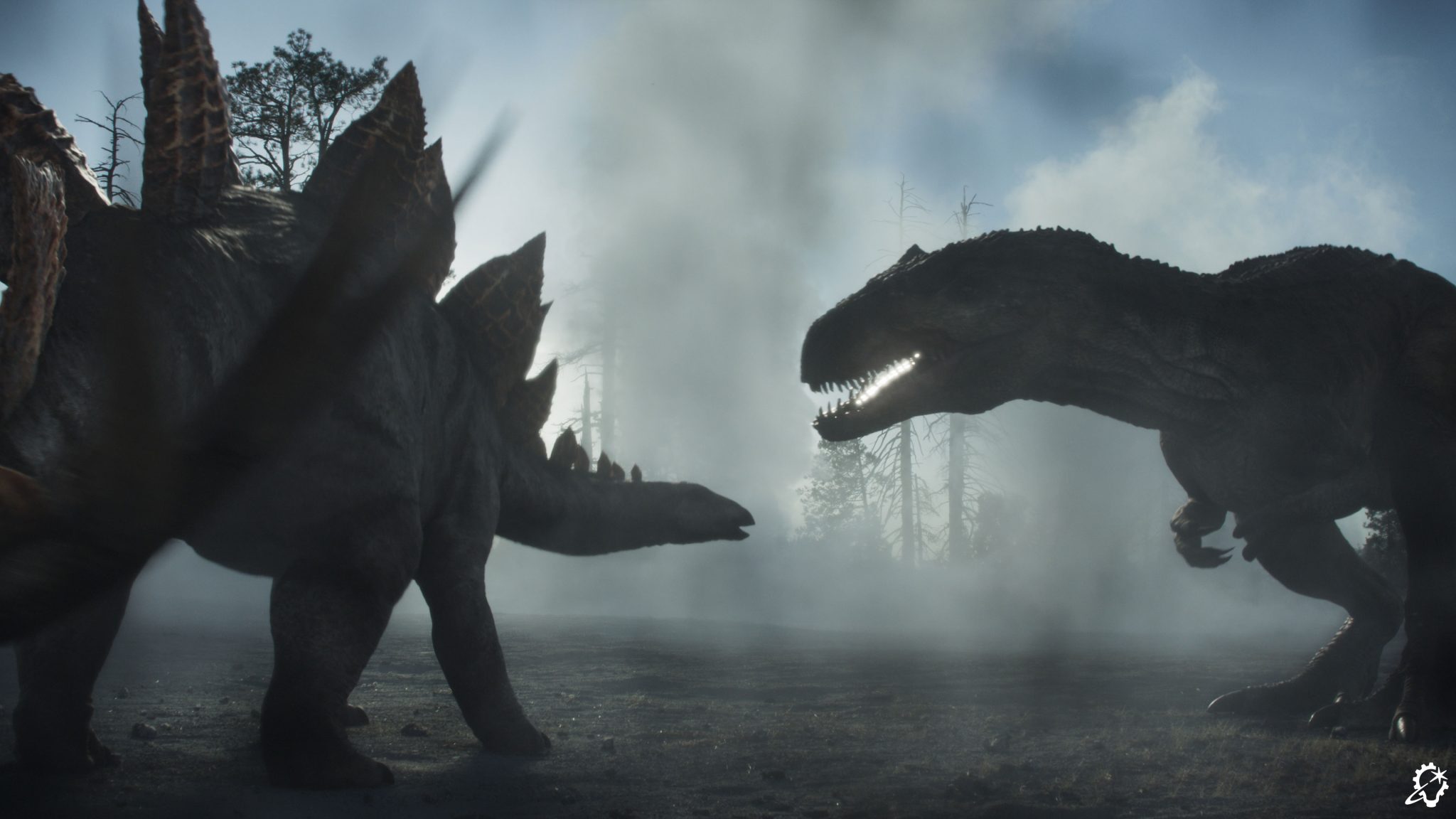
Despite the differences between the Netflix shows, The Dinosaurs would share plenty of digital DNA with its predecessor, as Moncur explains. “From a technical point, we were going to take some of the Loop 1 assets and retexture and repurpose them for The Dinosaurs because everybody wants those classic dinosaurs, be it a T. rex or an Ankylosaur.” With a third of the creatures from Life On Our Planet joining the menagerie of The Dinosaurs, that incorporation required some changes as they moved into Loop 2. “Our rigging systems and feather and texture systems changed over time, so there was also some re-engineering there.”
“Technology-wise, we’re largely using the same things we’ve been using for a while,” explains Waite. “But our artists have got a lot better at using them, and a lot faster.”
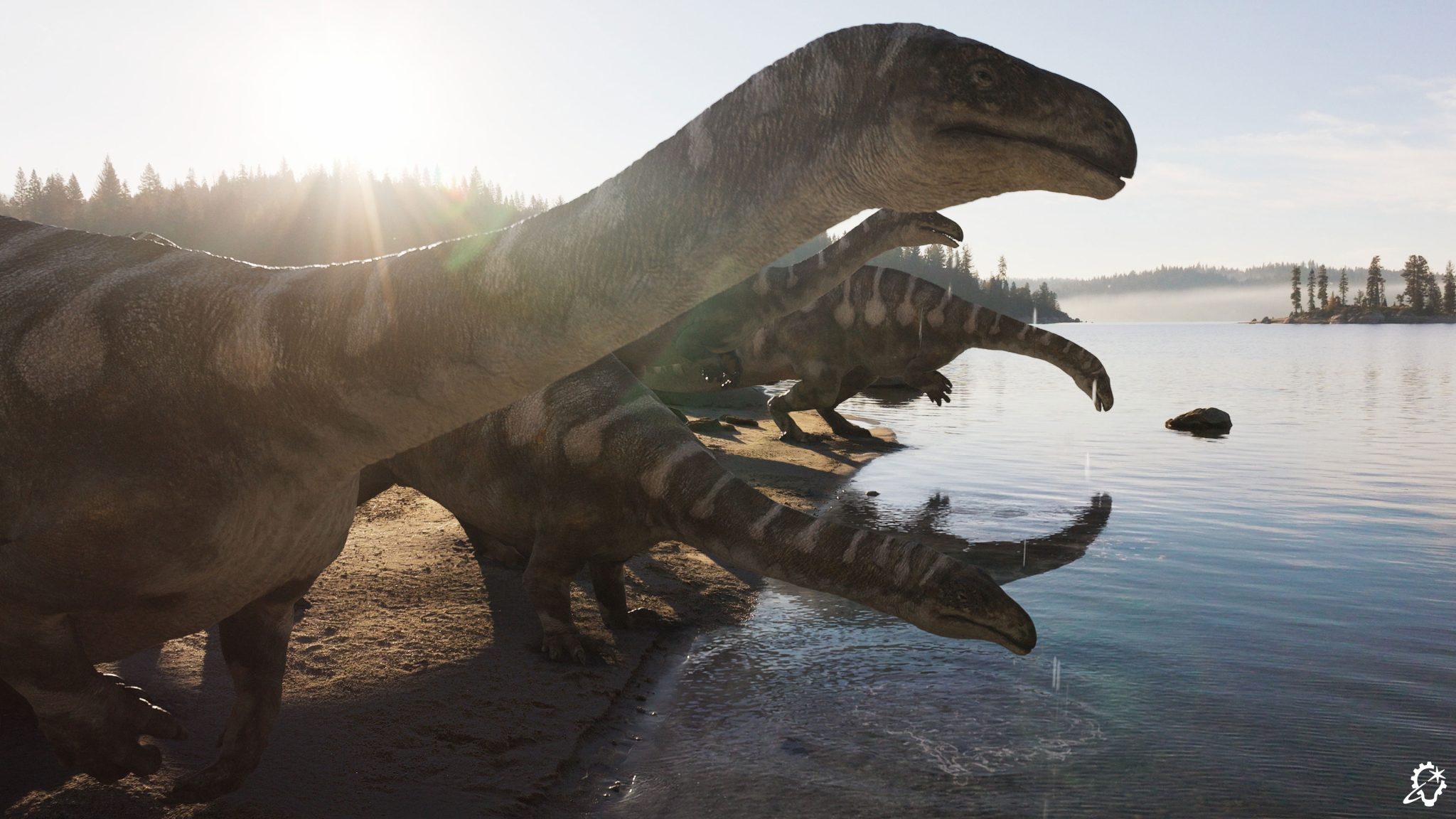
Read the article in full here and stream The Dinosaurs on Netflix.
Images: ILM and Netflix