Brad Rau and Jennifer Corbett talk to Dan Brooks at StarWars.com as they look back on three years of Star Wars: The Bad Batch.
Spoiler warning: This interview discusses plot points and story details from throughout Star Wars: The Bad Batch Season 3, including the series finale.
StarWars.com: To start, I wanted to say that I was so worried that another Batcher was going to die in the finale, and I feel like that’s probably a result of the fact that you actually killed off Tech earlier in the series. I’m wondering if that was ever on the table — that another of one of them might not make it out of the series alive.
Brad Rau: That’s a great question.
Jennifer Corbett: I’m sure we talked about it, but I think we wanted the ending to be a bit more hopeful and it didn’t feel right for the story to have one of ’em sort of fall behind. Losing Tech was hard, but we talked about that so much because it is the Dark Times. The Empire is increasing in power and each time they keep going up against them, something bad is bound to happen and they’ve experienced that. But luckily, they made it through this time.
StarWars.com: Well, they don’t all get out completely unscathed, right? Especially Crosshair.
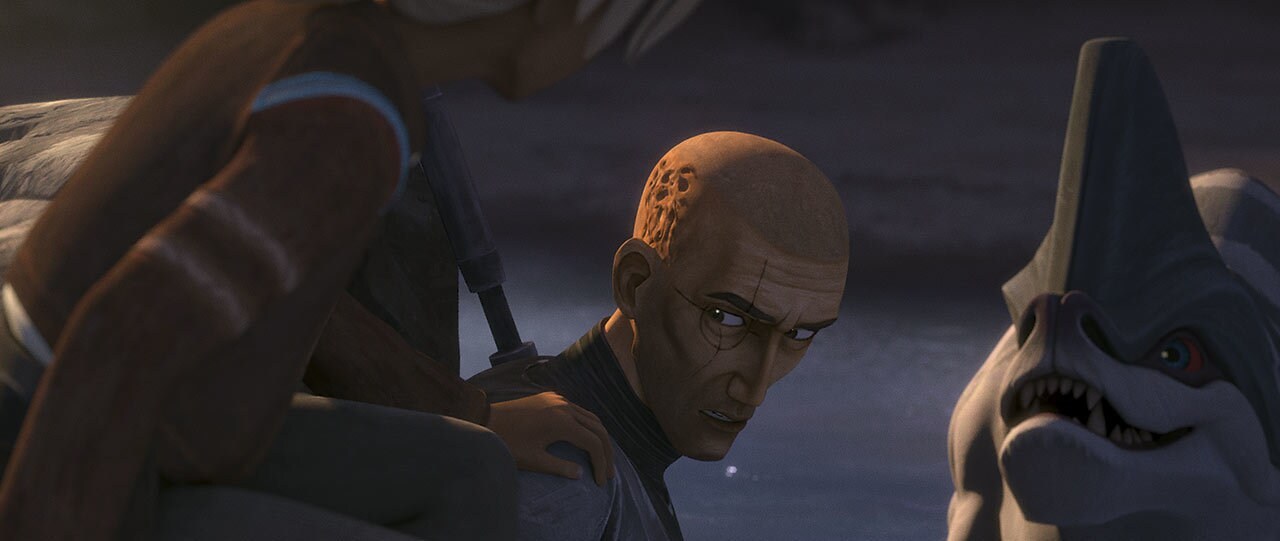
Jennifer Corbett: We put him through the ringer since Season 1, and I think in Season 2 it’s a lot more of self-reflection and coming to terms with what he’s been a part of and watching that evolution in him, where he’s willing to make that change and admit that he was wrong. But we didn’t want, in Season 3, even though he comes back into the crew, for everything to be happily-ever-after for him because he does still have to address the things that he’s done, both mentally and physically. And Dee [Bradley Baker, voice of the original Bad Batch members] does such a great job with showing the different shades of Crosshair, because I feel like you can understand where he’s coming from, but also feel like he’s trying in his own way to sort of be a better person. But it always comes down to who’s pushing him to be better, and it’s Omega and the rest of his squad.
Brad Rau: Yeah, totally. And Omega, oh my gosh. I mean, speaking of Dee and Michelle [Ang, voice of Omega], what a dynamic duo. They’re so great. We had so much fun with Crosshair and Omega together in Season 3, and as the season went along, we just wanted more of that duo. There’s an episode when we go back to the outpost with the ice worm, where there’s these great interactions where Crosshair is butting heads with Hunter and it’s Omega [telling him], “I told you to talk to him, not to argue!” And just the way that he reacts to her and he listens to her was so beautiful.
Jennifer Corbett: Also, Crosshair knows more about what’s going on on Tantiss than anybody else in terms of the CX troopers. The fact that he’s carrying with him the side effects of Hemlock trying to turn him into a CX trooper, he knows how dangerous they are. He knows how brainwashed they are, and I think that’s also another reason why he’s terrified to go back. He fears what will happen to the rest of his squad if they step into that base and face not only the massive amount of stormtroopers that are there, but also the CX troopers.
StarWars.com: Was the Crosshair/Omega dynamic in mind at the beginning of the show, or did that kind of evolve as you went on? Because it really seemed to take center stage this season, and now when I think of the show, I think of those two probably more than anyone else.
Brad Rau: That’s great, Dan. That’s awesome. We always talked about that, but literally as that dynamic started to come together, the characters just needed to be together more, so we expanded on it more than we thought.
Jennifer Corbett: Well, even in the pilot, because Crosshair is immediately affected by the [inhibitor] chip, his interactions with Omega are still so stilted because he’s dealing with that. So even in the pilot when they’re stuck in that cell and she’s trying to get through to him, but she knows that he can’t help it, because she knows about the chip and she knows that that’s really not who he is.
I don’t think I knew the extent of how great Dee and Michelle would perform their interactions in Season 3. They’re just fantastic. But it was better than I thought it would be because Crosshair doesn’t interact with the Batch at all in Season 2. So to then get him together with Omega and the rest of the crew, it’s fun to explore what this new dynamic is, especially, since Season 1, he didn’t refer to her by name at all. It was always like, “the kid,” and he didn’t really want anything to do with her. And what do you do when you pair someone up, who is gloom and doom and sour, with this person who’s just optimism and hope and strength? And they just really took over. I’m glad for that, because Omega had time to be with the other characters. It really felt like Crosshair needed her the most, and that’s what she’s doing in Season 3.
StarWars.com: I love the idea of the tremor that Crosshair develops, which felt like a really real-world manifestation of what he’d been through. Can you talk about coming up with that concept and then kind of peppering it into the show throughout the season?
Jennifer Corbett: Well, being a sniper, I think it’s very true to a character that that’s his job — where he’s usually more isolated from the crew. That is where he is, he’s always in a sniper’s nest and Crosshair is more of a character that will internalize things. So to have him be a prisoner on Tantiss, and he’s going through this PTSD of the experimentation that he’s subjected to, but he’s also holding in all of this emotional turmoil. Between those two things, it manifests in this tremor. And we show him having to work through it and address it, because even Hunter and Omega were like, “You can’t keep ignoring it. It’s not going to make anything better.” But it did feel like going through something so traumatic, he would have some kind of physical manifestation of that issue.
Brad Rau: And it was a really great visual cue. You’ll see through Season 3 a lot of closeups of his hand, and he’s balling his fist so that, like you’re saying, Jen, other characters can see that. It’s so internal, obviously there’s not a narration. It’s a challenge on the visual side — how do we tell the audience what this guy’s thinking without telling the audience what this guy’s thinking? And so it just became a really great visual cue. Honestly, we had even more — we had to pull back. It wasn’t a matter of peppering it in like you’re asking Dan, but really we kept going to that because it was such a great visual cue to show what he was thinking, that we had to pull back in a few places so it wasn’t overkill.
StarWars.com: One thing that is not talked about enough in regards to the show is the world building that it does. I’m always interested in seeing new aspects of the Empire and how they function. The Bad Batch really shows the science division and who works there, and the bleed-over from the Republic to the Empire.
Brad Rau: Emerie is a great example of telling the story of a very specific role in the Empire from a very specific point of view, with a very important character and her really slow arc through the show. But we also got an opportunity to design and build out all of this fun technical stuff. Some it very specific, some of it intentionally not specific. [Laughs.] We have so much fun visually building out the world, as well. Tantiss, there are so many nooks and crannies that we kept going further into and having fun expanding on. But that’s just a very specific part of it.
Jennifer Corbett: And because we’re still in the early years of the Empire, we knew we weren’t going to be able to do something huge, like talk about the Death Star or deal with the Empire in that regard. But our show has always really just been about the clones and the clone troopers and their purpose now that the Republic has gone and things have changed. We wanted the Empire’s point of view and the villain to really be connected to the clones. And we see that in Season 1 with Tipoca City and then also with the cloning that’s going on on Tantiss for the Emperor. It’s really just more of how the Empire’s affecting the clones and keeping it contained in that way, so it feels like a satisfying story for the show.
StarWars.com: On that note, something I thought was really interesting was the show’s exploration of clone rights and what’s going to happen to them, because you probably could have done the show without diving into that. But those are the types of things that fans talk about. “Well, what happens to the clones? What does the government have to say about it?” So I’m just wondering how that side of the story came about, and weaving that into the story of the Bad Batch.
Brad Rau: I mean, we’re fans. We’re big fans, so that’s the stuff that we talk about. We’re always looking for ways to ask those questions and address those questions and get them in there. So yeah, anytime we had a chance to do that, we were all in a hundred percent.
Jennifer Corbett: Early in the development of the show, the one question I had going in was like, “What happened to the clones?” I’m a fan of The Clone Wars, and all of a sudden, they’re gone. So I felt like it was exciting for us to be able to tackle some of those questions. We always try to ground each of these stories in something real-world, and the early concept was talking about veterans who now no longer have a war to fight. Now it’s these clones and the end of the war, the beginning of the stormtrooper program. Now we have thousands of clones in the galaxy who are going to be out of jobs, and that has been their sole purpose since their creation. So it was really exciting for us to be able to bring this political issue there. And again, it also shows that there are people in the galaxy, even though the Empire is the rule, who are fighting for the clones and who are trying to still do right by them, like Senator Chuchi. But again, it just felt like a very real-world topic that is very relatable to these clones, and then also to military veterans today.
StarWars.com: How do you think the clones view their service?
Jennifer Corbett: I think it depends on each clone. The Republic is just so different from the Empire, and I think that’s why the sudden change is so jarring, especially for Echo, since he’s technically a reg but didn’t execute Order 66. So he’s now witnessing what his brothers are doing, but he’s not affected by the order. I think it was episode two when they’re going to visit Cut Lawquane, and Tech describes Cut as a deserter. Echo is like, “You trust a deserter?” and Tech’s like, “Well, why not? We’re deserters too, now.” And you can see Echo’s reaction, which is like, “Oh my God, we are.” He has just always been the straight-A soldier who believed in what they were doing, and now it’s like, “Well, now I’m not a soldier. I’m a deserter. What am I supposed to be doing with the rest of my life? This was all I know.” So again, I think it affects him the most because that’s just who he is. With the Batch, I think they were the never-fail squad, but then when Omega came into the picture, Hunter, especially, started questioning what else is there for them because he wants to give her a better life than they had. She’s been confined on Kamino and hasn’t had a childhood, and neither have they. So I think it’s always been in the back of his head that they need to think of another option to really not settle down, but just find out what else is out there for them.
StarWars.com: I’d like to go through some of the bigger moments and story elements from the final season, and you both can just talk about any insights from their conception or memories from making the show?
Jennifer Corbett: Yeah!
StarWars.com: Was Omega’s escape plan, secretly creating a hole in her cell wall, a nod to Shawshank Redemption?
Brad Rau: We talked about it, for sure. The thing that we really wanted to do, and maybe this segues into a bigger discussion, is we always knew — and we talked about it with Dee and Michelle a lot, too — that once Omega is taken back there, as tragic as that is in the back of your head, we did, like you’re saying, Jen, want the audience to feel like, “Come on, Omega, get in there. You’ve got to help these kids out.” So that once she’s in that role, she’s now the “Hunter” of this group. She became Hunter-Omega. We’ve seen versions of her imitating her brothers or showing the skills that she’s learned from her brothers. But here she really becomes, just short of the bandana, Hunter to these kids. And even the way Michelle performed — it’s a terrible situation but she’s very calm, planning things out, keeping the kids calm, and in charge of the group. It was really, really cool.
Jennifer Corbett: And it’s a bit of a parallel to the pilot episode where Omega is not at all trained and they go and rescue her, but are confined and have to find a way out, and it’s really the Batch that’s leading the charge on how to figure this out. Whereas now, Omega, when she goes back to Tantiss, doesn’t have time to wallow or worry because once she sees these kids, it’s like, “Oh, this is not about me. I have to look out for these young children and figure a way out of this mess.”
Brad Rau: Which was the other thing that we wanted to show. That yes, her brothers show up, but she gets the kids out. She rescued them herself. It’s pretty cool.
StarWars.com: They get there, but she’s already out by that time. It makes you think even if they never showed up, she would’ve figured out a way to get off the planet. I think, thematically, it shows that she’s fully formed at this point.
Jennifer Corbett: Yes, yeah. But keep in mind, even if she got the kids off the planet, she still wants to free the clones that are in prison there. So that was what we were always juggling with — showing how she has grown and become a capable person and soldier, but also the teamwork of them joining forces in order to complete the full mission, which is freeing all the prisoners.
StarWars.com: I want to talk about the epilogue, which was a really nice surprise. Was it always part of the episode? Or was it something added later on where you thought, let’s do a time jump and show where they end up, and possibly a new beginning for Omega?
Jennifer Corbett: I think early in the development of Season 1, the discussion was really, “How does it end and how do we see it ending?” So we had some discussions about, would Clone Force 99 walk away? Are they going to stay in the rebellion? How does it all really come out? And it kept kind of changing as the seasons were progressing. But as we were in Season 3, we talked a lot about this scene, and I can’t remember when we knew what we wanted to do. We wanted it to be a very personal moment because we wanted to show all the training the Batch has done and for Omega to be older, and now it’s her turn to make a decision in her life as to what path she wants to take. For me, it was personal because I was going off of when I joined the military and how my parents were obviously very concerned about it, but how I kind of felt like I had to go and make my own choices and decisions.
Brad Rau: Yeah, I mean, having sent two kids to college — that moment, it’s a proud moment, but it’s so bittersweet and you know your life is going to change. So yeah, it’s really interesting, Jen, that you and I had these different points of view on that. And honestly, different members of our team, as we were making it, shared in those different points of view. It was a very cathartic thing, strangely, for us as creators, but also being able to show that these soldiers could decide to put their guns down in this terrible time is a beautiful thing. But also the question could maybe come up, if they could still help people, why don’t they help people? And so we hope that with the epilogue we’re showing that they are doing both. They got to have peace. They got to step aside from the battle, put down their guns and stop causing more violence. And yet, how could this kid who’s learned so much from her brothers stay out of the fight forever? She couldn’t. We just really wanted to show that, too.
StarWars.com: You see her grow up in the show, and I think of kids who grew up with her. If you were seven when the show started, you might be 10 now; if you were 10 when it started, you might be 13 now. You’ve grown up. So I think to put the epilogue in there, it gives them something to connect with in terms of how they’ve changed as the show has gone on. Is that something you were thinking about?
Jennifer Corbett: Oh, yeah, because we’ve all grown up with Star Wars in different ways, that it’s affected us and impacted us. I love to hear that. And I think it’s always been telling Omega’s story, but also, I think, one of my favorite moments is when she’s flying off and Batcher’s upset, and Hunter’s like, “Don’t worry. She’ll be fine.” Even though he has his worries, he knows that this is what she’s meant to do and this is what she has trained to be. It’s really just kind of like him letting her be who she wants to be.
Brad Rau: And going off to college, whether you’re the kid or the parent, having experienced both myself, it is the end of a chapter and also the beginning of something else, which is really cool.
StarWars.com: After she flies away at the end of the show, do you have an idea about what comes next?
Brad Rau: I’m not going to answer that question.
Jennifer Corbett: [Laughs.] Nice try!
StarWars.com: I’m taking that as a yes.
Brad Rau: That’s up to you.
Jennifer Corbett: We can all have our theories. [Laughs.]


Read the interview in full at StarWars.com, and stream the final season of The Bad Batch on Disney+ now.