Lucasfilm’s Dan Brooks spoke to Joe Johnston, acclaimed filmmaker and Industrial Light & Magic great, about his contributions to the Indiana Jones series and its impact on his work.
To borrow a phrase from Indiana Jones, one might argue that Joe Johnston’s concept art belongs in a museum. An acclaimed filmmaker and Industrial Light & Magic legend, Johnston served as an art director on the original Star Wars trilogy, his designs among those that defined the look of the X-wing, AT-AT walker, and Boba Fett. And he would do the same for Indiana Jones and the Raiders of the Lost Ark and Indiana Jones and the Temple of Doom.
But as Johnston tells Lucasfilm.com, Raiders of the Lost Ark director Steven Spielberg chose to display one of his originals in a much more modest location than a museum. “He had a piece of art, I think it was from Raiders, a sketch I did. And he had it framed and he put it over the toilet in the bathroom adjacent to his office. He said, ‘Yeah, I wanna look at that every time I have to go to the bathroom,’” Johnston says, laughing.
Johnston pauses while telling the story over Zoom, and holds up a drawing. It’s another work of concept art from his own stash, this one an exploration of the Temple of Doom airport. “So, I’m gonna give him this,” he says. “He might need some more bathroom art.”
With the Man with the Hat about to return to theaters in Indiana Jones and the Dial of Destiny, and the four original Indy films and The Adventures of Young Indiana Jones TV show arriving on Disney+ last month, it seemed a good time to revisit the series with Johnston. As a founding employee of ILM, Johnston heard about George Lucas’ idea for an adventuring archaeologist while wrapping up work on 1980’s Star Wars: The Empire Strikes Back. “I remember that George talked about making a movie that was sort of roughly inspired by the serials of the ‘30s,” Johnston says. “George was talking about this film about an archaeologist adventurer guy named Indiana Jones, who was actually named after his dog, Indiana, and that Steven was going to direct it, and that ILM was going to do the effects, of course.”
Even before he saw any of the script, Johnston had a good feeling about Raiders. “Well, I knew that because it was George and Steven working together, it was going to be something special,” he says. “Plus, it was really different.”
Johnston would find, however, that work on Raiders was very different from what he’d grown accustomed to. “There wasn’t a whole lot of design work to be done on it, because it’s not like on the Star Wars movies where you’ve got these spaceships and hardware and costumes and gear to design. It took place in the ‘30s, so it’s not like you’re designing a whole new world,” he says. Still, Johnston relished the opportunity to step back in time creatively. “It was actually a lot of fun,” he says. “I’m a big fan of that period of history. I love the ‘30s and ‘40s. Cars and buildings, even everyday objects were designed to look beautiful, whether they were efficient or not.” In talking about his appreciation for design from this era, Johnston stops to clarify something.
“There’s a misconception of what I do, and I’ve been fighting this for decades. People think I’m a visual effects person. I’m not at all, and I never was,” he says. “I was always a designer. When I worked on Star Wars, the task of designing hardware evolved into sequence design and character design and stuff like that, laying out these action and visual effects sequences in storyboard form. But essentially, I’ve always been a designer. And because I designed the stuff that is then used in these great visual effects sequences, everybody thinks I’m a visual effects guy. I’m not at all,” he says with a laugh. “I love visual effects as a tool to tell a story, but now as a director, all I need to know about visual effects is that anything is possible.”
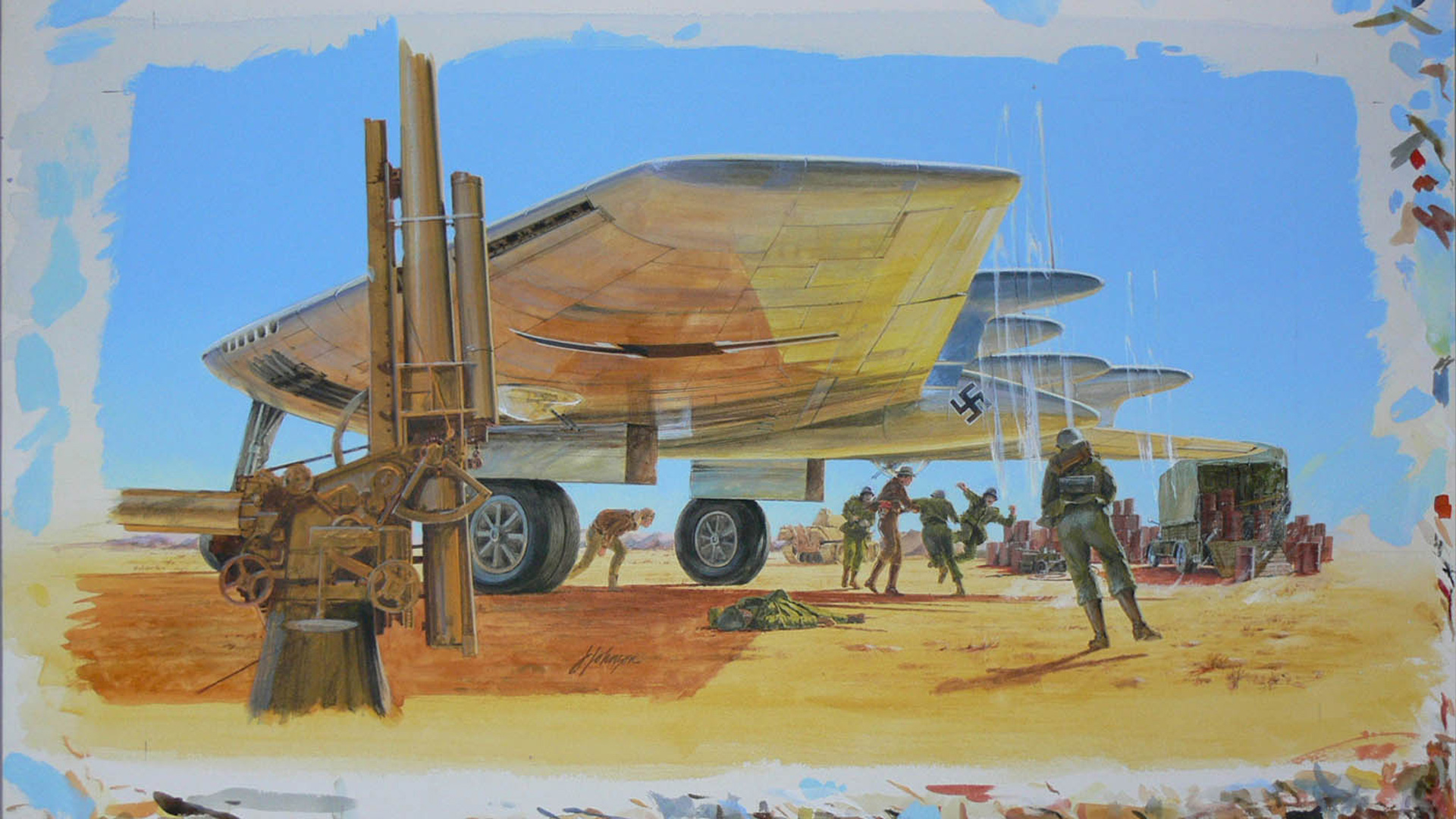
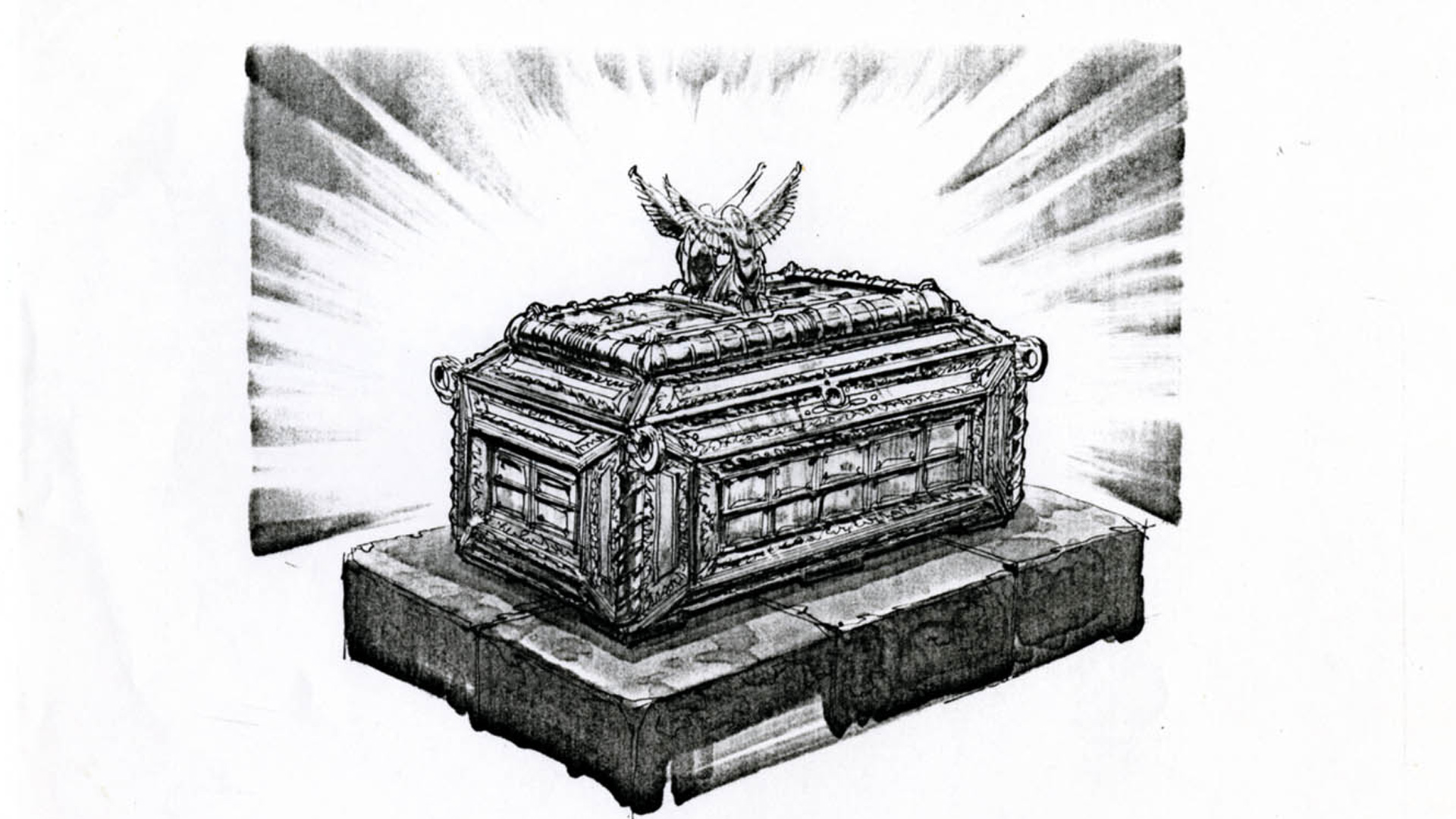
For Raiders, Johnston’s contributions and guidance came in shepherding the look of visual effects sequences and specific elements within them. “There were sequences in Raiders that were not fully conceived yet,” he explains. “Like a lot of George’s scripts, there’d be a very brief description of what this action sequence or visual effects sequence was going to be, and then he would get on with the rest of the live-action stuff. So, there were sequences that needed to be designed and that was mostly my input on Raiders, especially the sequence at the end, where Belloq opens the Ark of the Covenant.”
That sequence, of course, was one of the most memorable from the film. The scheming Belloq and his Nazi allies have secured the Ark and open it to access the power within; doing so, however, leads to their doom. From the sounds of it, determining their fate was a highlight for Johnston and his collaborators. “We had these three villains that all needed to die in a different, spectacular way. I had a meeting with Phil Tippett and Chris Walas. ‘How can we kill these guys in a really interesting way as the Ark is opened and this mysterious power comes out?’ Well, we can have one guy’s face melt. That’s cool. We can build his face out of wax and apply heat guns to it and do timelapse of it melting. That’s creepy. We can have one guy’s head just explode. Chris Walas had worked on a film called Scanners where people’s heads explode. And then the other guy, we said, ‘Well, okay, we can build this guy’s head out of rubber and put a suction tube inside the skull so you start with his face shrinking and then you see his skull, which is sort of weird. How did that happen? It was different, something we hadn’t seen before. That was fun.”
When Johnston finally saw a cut of Raiders, he found that his initial enthusiasm was warranted. “I thought it was fantastic,” he says. “By the time the film was finished, we had seen huge parts of it, the visual effect sequences. And at some point we saw a rough cut of it. So, I knew it was going to be great and something that audiences hadn’t seen since the Republic serials of the ‘30s, even though it was way beyond anything that had inspired it. It was great casting. It was beautifully shot. It was well-directed and well-conceived, well-written. It had everything going for it. I think it was one of Steven’s best films, along with Jaws and E.T. and some of those other early films. I think those are my favorites.”
In the end, Johnston was part of the group to win the Academy Award for Best Visual Effects following Raiders’ 1981 release — not bad for someone who’s not a “visual effects person.”
Read more of this fascinating interview at Lucasfilm.com.