Mark Newbold, writing at ILM.com, talks to ILM’s visual effects supervisors Vincent Papaix and Abishek Nair along with animation supervisor Mike Beaulieu to discuss bringing the Grid to the streets of their very own city of Vancouver for Tron: Ares.
Think of the most iconic films of the 1980s and there’s a good chance that among those unforgettable films would sit Tron (1982), a movie that changed the cinematic landscape in ways its makers couldn’t possibly have imagined.
First conceived in 1976 by writer/director Steven Lisberger as an animated adventure, a 30-second promotional video made with producer Donald Kushner soon blossomed into a combination of backlit animation, live-action footage, and 2D computer animation to create the visual world of Tron. With Walt Disney Productions both financing and releasing the film, it debuted in North America in July of 1982, setting the stage for the computer graphics boom that would follow.
Step forward 28 years to 2010, and Tron: Legacy, which saw Lisberger return as producer, now with first-time director Joseph Kosinski at the helm. Production on Tron 3 was next, as announced by Lisberger in 2010. However, a series of stalled attempts saw that initial iteration of the sequel fade away. But by 2017, elements of a draft began to develop, and by January 2024, production had begun on Tron: Ares (2025), directed by Joachim Rønning.
The film is a dazzling return to the world of Tron, bringing characters from the digital realm into the flesh-and-blood reality of today. The skills of the artists at Industrial Light & Magic were entrusted with the responsibility of not only creating something fresh and engaging, but honoring the styles, designs, and vision that had come before. ILM.com had the good fortune to sit down with three of the artists based at the Vancouver studio who are behind the visual effects of Tron: Ares – visual effects supervisors Abishek Nair and Vincent Papaix, and animation supervisor Mike Beaulieu – to discuss the return of the Grid to cinemas worldwide.
Classic Inspiration
“It was a lot of fun to look back to Tron with its early 2D computer graphics, and Tron: Legacy, where new CG was established,” explains Vincent Papaix. “You could see the design upgrade. We looked at the broad shapes and rebuilt the assets from scratch. On Tron: Ares, we were paying tribute to both movies and seeing how we could incorporate both styles.
“There’s a sequence when Ares goes back into the old arcade game and meets Flynn,” Papaix continues, “so that retro 1982 look was needed, but the rest of the movie steers closer to the more futuristic, up-to-date look of Tron: Legacy.”
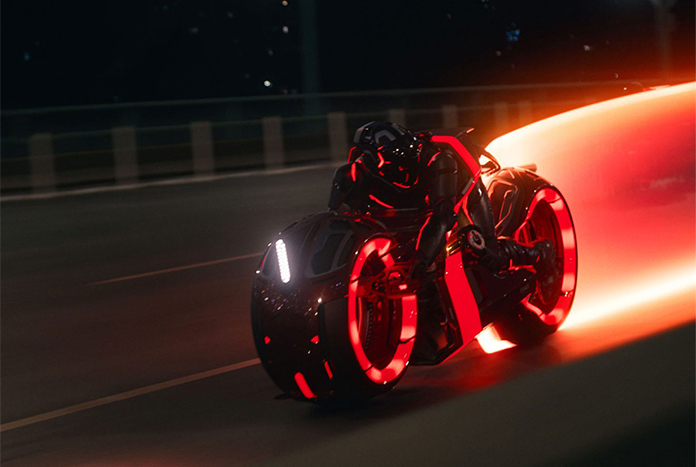
“The goal of the animation department was figuring out how we can make things look like they belong to the Tronaesthetic,” says Mike Beaulieu, “but exist in the real world, which is something we’ve never seen before in a Tronfilm. You always saw those vehicles in the Grid. It was the early days of computer animation, and some of the things the bikes did, like turning 90 degrees in a one-frame turn, we couldn’t do in the real world. If the bikes turned that quickly, we’d have lots of injured actors, so there was no way to marry the physics to something that stylized.”
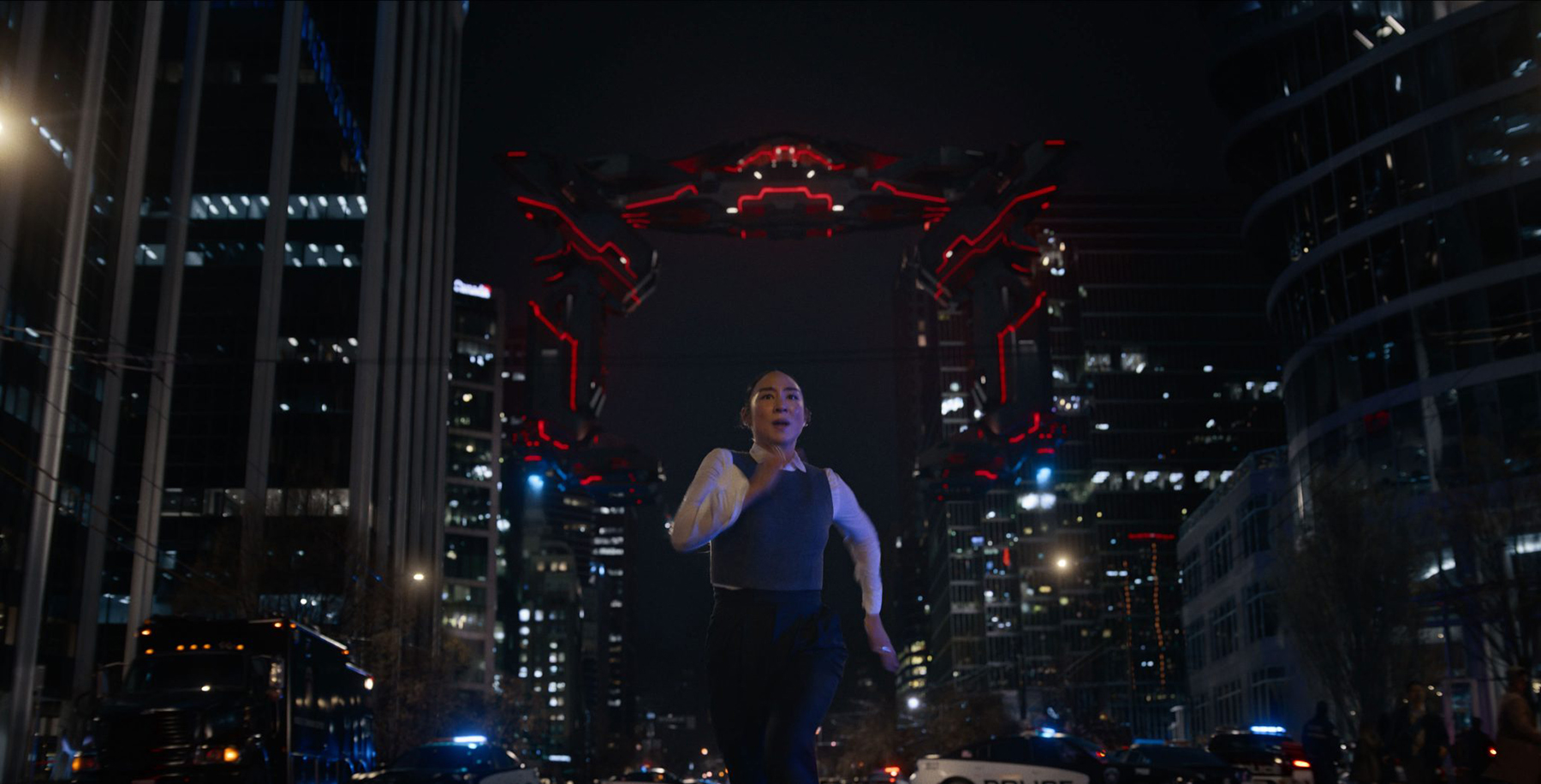
“We needed to make sure that when the Light Cycle and the Recognizer were printed into the real world, the designs were upgraded because they needed to feel believable,” adds Papaix. “For example, the Recognizer had engines because we now had to show how this massive thing flies.”
Tron arrived in an era when visual effects had captured the imagination of audiences worldwide, thanks to films like Star Trek II: The Wrath of Khan (1982), which landed in cinemas a week after Tron in 1982 and featured its own groundbreaking CG effect in the fractally-created landscape shown in the Genesis sequence. ILM was breaking ground with every project they participated in, but the company had never entered the Grid – until now.
Mike Beaulieu describes his special connection to the film. “I didn’t talk about it much during the production, but it was very personal for me because Tron is my father’s favorite film. It was the first film he saw where the action heroes were computer programmers and computer geeks, and that’s what he was. He came up in the age of computers really becoming a thing, so it’s one of the movies he’s always loved. It was really exciting to be involved and have that little feather in my cap. I went to see it for the first time with my dad, so that was pretty cool.”
On Location
Coming onto the project two months before principal photography began, visual effects supervisor Abishek Nair worked closely with production visual effects supervisor David Seager to oversee on-set duties. With the digital world of the Grid about to enter the real world, this newest Tron story required some changes.
“Initially, there wasn’t a plan to have a splinter unit or a second unit,” Nair explains, “but with the schedule, challenges with the weather, and different locations, it was decided that a second unit would shoot the stunts, car crashes, and visual effects-related work.”
Nair’s place on the set allowed him to form an important connection between phases of production. “It was amazing because I had so much context on what was happening, as well as what we had and hadn’t shot.” It also offered another set of options for the ILM team. “I could tell them not to worry because we had photography of the set that we could derive data from, or we had props that had been scanned. I could form a bridge between production and post-production and give that sense of coverage for the entire project.
“We had a small visual effects team that had started working with assets and building some of the environments for the show,” Nair continues, “but when I was on set, I could chat with the team and say, ‘We couldn’t shoot this stuff, so we’re going to have to build these things,’ or ‘I’m going to shoot this tomorrow, so tell me what you need. I might just be able to cover all that for you guys as well.’ It became a symbiotic process where I could internally work with my effects team while working with my on-set team. It really made a difference, and it helped us better prepare for post-production because there were fewer surprises.”
With that increasingly essential bridge between the second unit and the visual effects team in place, Nair was able to contribute even more to the production.
“I have a pilot’s license, so I could work with the aerial unit and plan the flight routes, which helped the pilot because I sat next to him with my navigation charts, and there was a trust because he knew I wasn’t going to lead him into some crazy areas. We shot most of the aerial footage for the movie over four evenings. We were this little unit with an aerial cinematographer sitting at the back of the helicopter with my monitor, storyboards, and charts laid out in the chopper as we shot plates.”
Nair knew what could be done for real on the streets of Vancouver, what could be achieved by ILM, and the places where the two processes met.
“I would say to Scott [Rogers, second unit director and stunt coordinator], ‘Let’s actually flip the car and see what we get out of it.’ That got them excited, that we were pushing to shoot as much as we could in camera, and then augment with visual effects to take it to the next level. Why shoot an empty street when we’ve already got a lot of this stuff here? Let’s smash stuff up, get the garbage bins to fly, and then see what we need to augment or clean up, and make it as visceral as possible.”
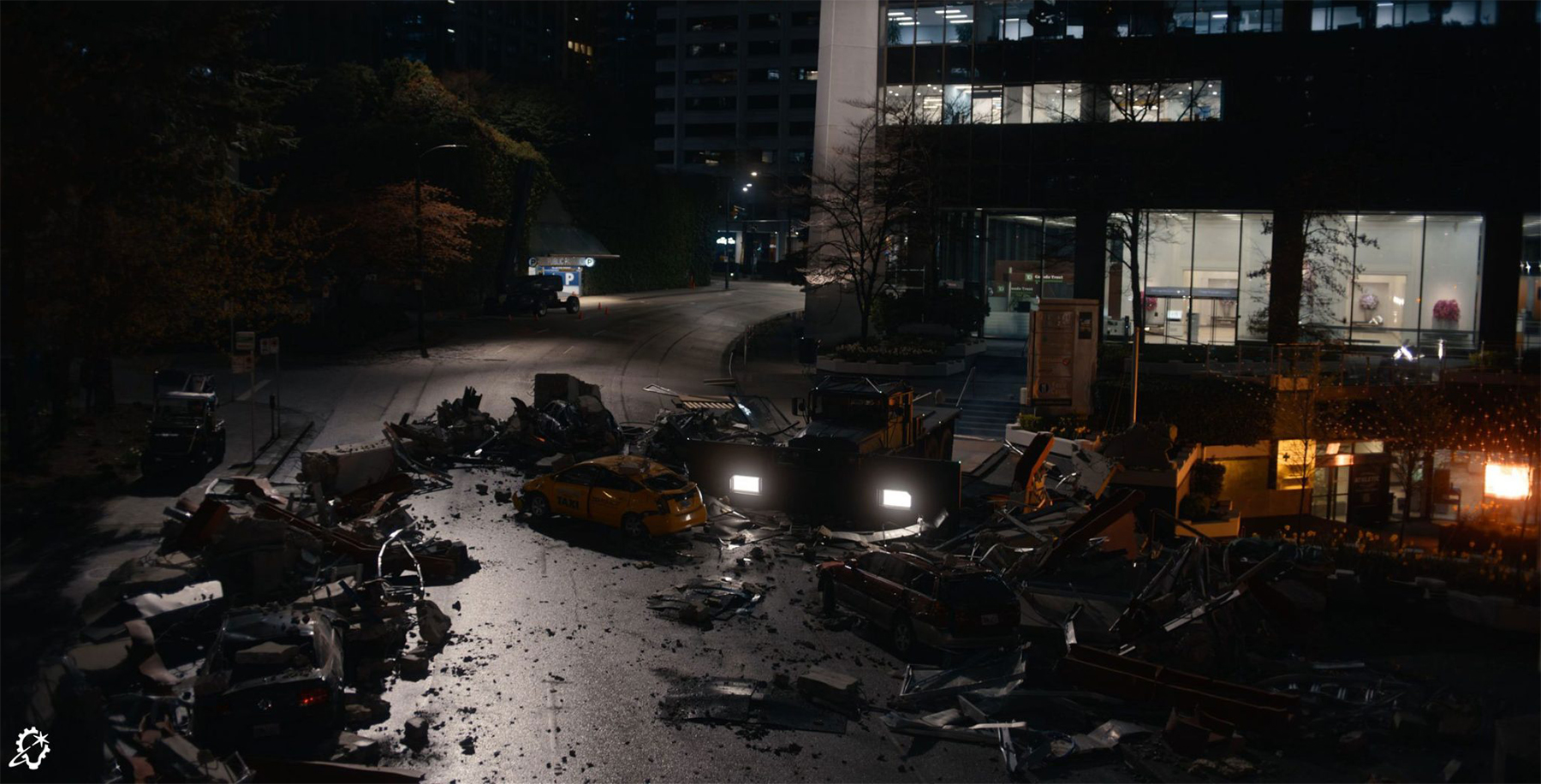
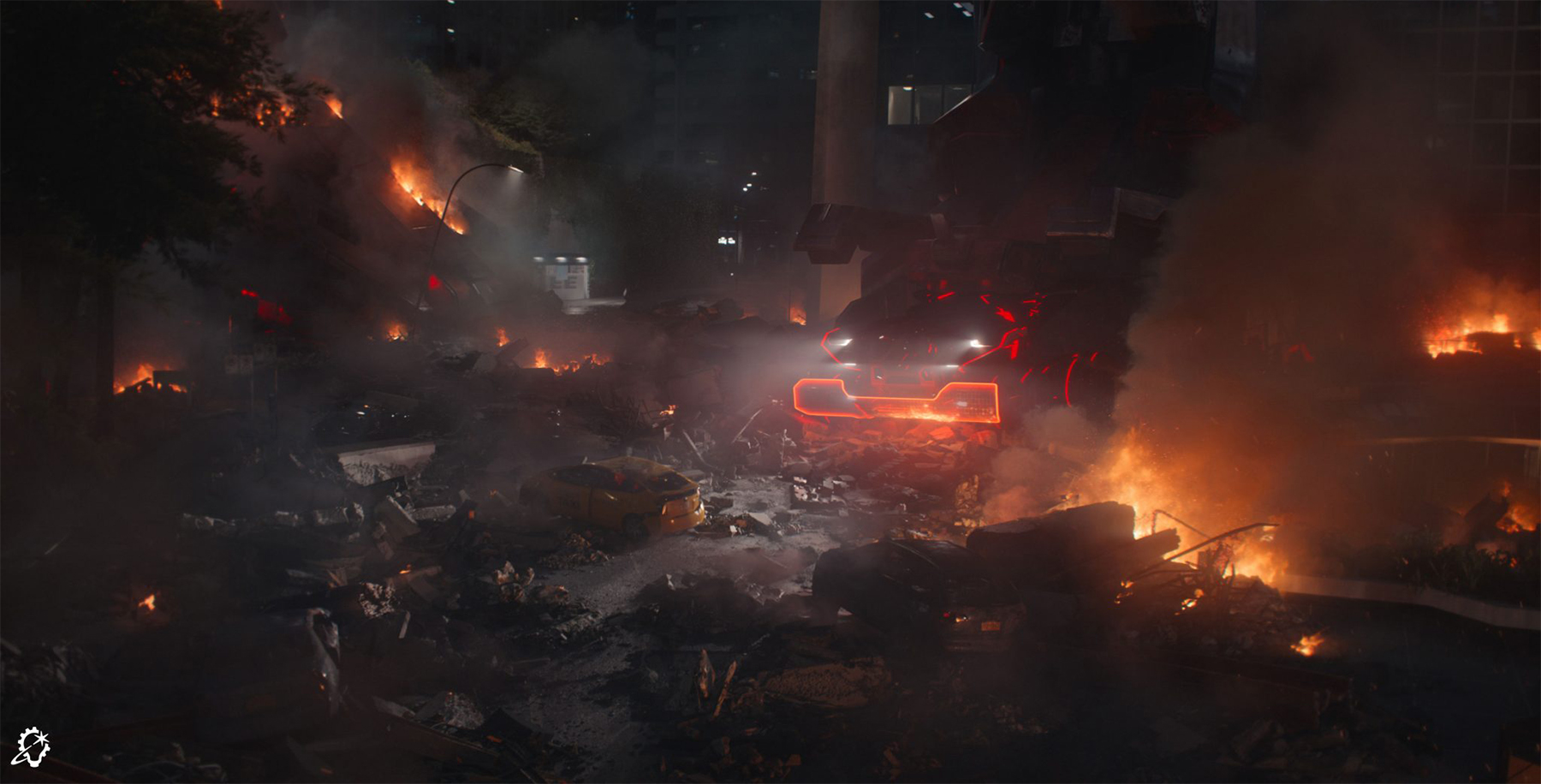
Read the article in full here, and stream Tron: Ares on Disney+.