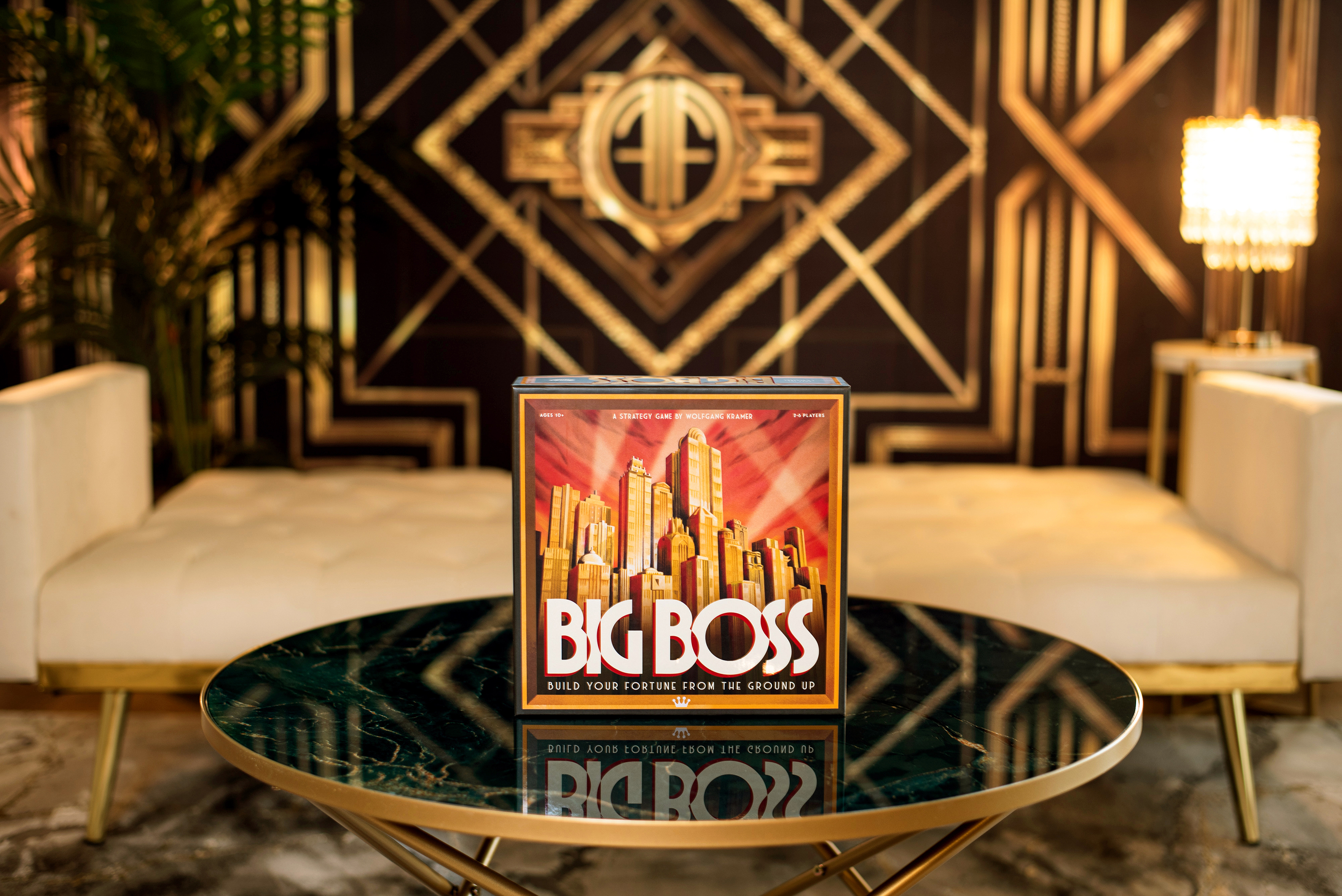
Big Boss by Wolfgang Kramer has been newly updated and translated for Funko Games, bringing this classic German title to a wider audience. Its aim is simple. During the Golden Age of Industry, players launch companies and invest in others, reaping rewards from successful mergers and earning capital in shares. Whoever invests wisely and has the most money at the end of the game is crowned Big Boss. And while a game about stocks and shares may sound a little drab, Big Boss is a surprisingly strategic game that sprawls over the board as you build your businesses to success.
Kat: Big Boss is not a game either of us would normally pick up. While its premise is certainly quite unique, a game about stocks and shares. Really? We came into this game with low expectations, wondering whether this was another type of Monopoly-like game that would pit us against each other. We were wrong. Big Boss has simple yet fascinating mechanics, where moves can be planned and investments calculated, all while building or merging businesses. It’s strategic, though not overly complicated, and the tactile nature of the pieces only lent to an even more enjoyable gaming experience.
Players begin with a hand of 10 cards, all of which are businesses ready to be built on the accompanying board, along with 40 million Big Boss dollars. On a player’s turn they can choose to play a card, building or expanding a business, buy a card, or buy a level up. As they do this, they may buy shares in the corresponding business or simply watch the share price increase. It sounds like a lot on paper, but once into the flow of the game, it is actually relatively simple. What did you make of the mechanics, Mark?
Mark: Initially, when you read the rules, buying stocks, increasing value, merging businesses, it sounds very complicated, particularly if the theme isn’t something you know much about. Yet one round in, everyone at our table knew exactly what they were doing. You have two action choices to make (that can lead to several more actions) but the simplicity of that decision, to the fact you only have one action to make per turn, means that there aren’t too many mechanics to worry about and your downtime is very minimal.
Where this game really shines is the deep, strategic thinking that goes below the surface of this game. The numbered squares to build this skyscraper landscape only ever appear once in the deck, which means having certain ones can be absolutely crucial. Play them too soon and your power to control the merging of corporations disappears, leave them too late – as I found out – and they can become useless. It is all about clever timing and has that almost chess-like quality to it where you are having to try and plan your actions several turns in advance to make the best investment. While this is all happening, the sprawling city is growing. Literally! The components, from the building parts to the cards themselves are rather impressive, aren’t they Kat?
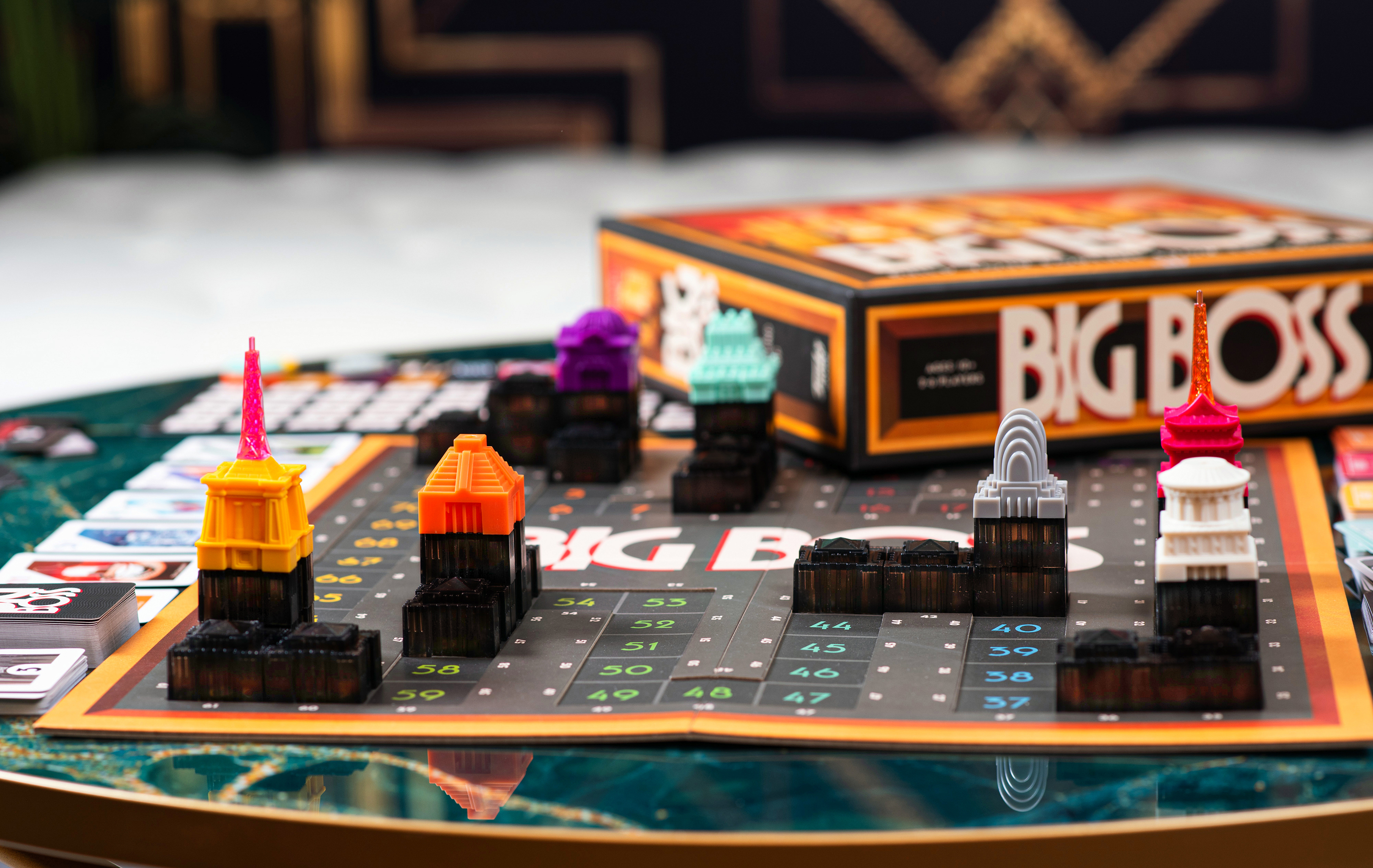
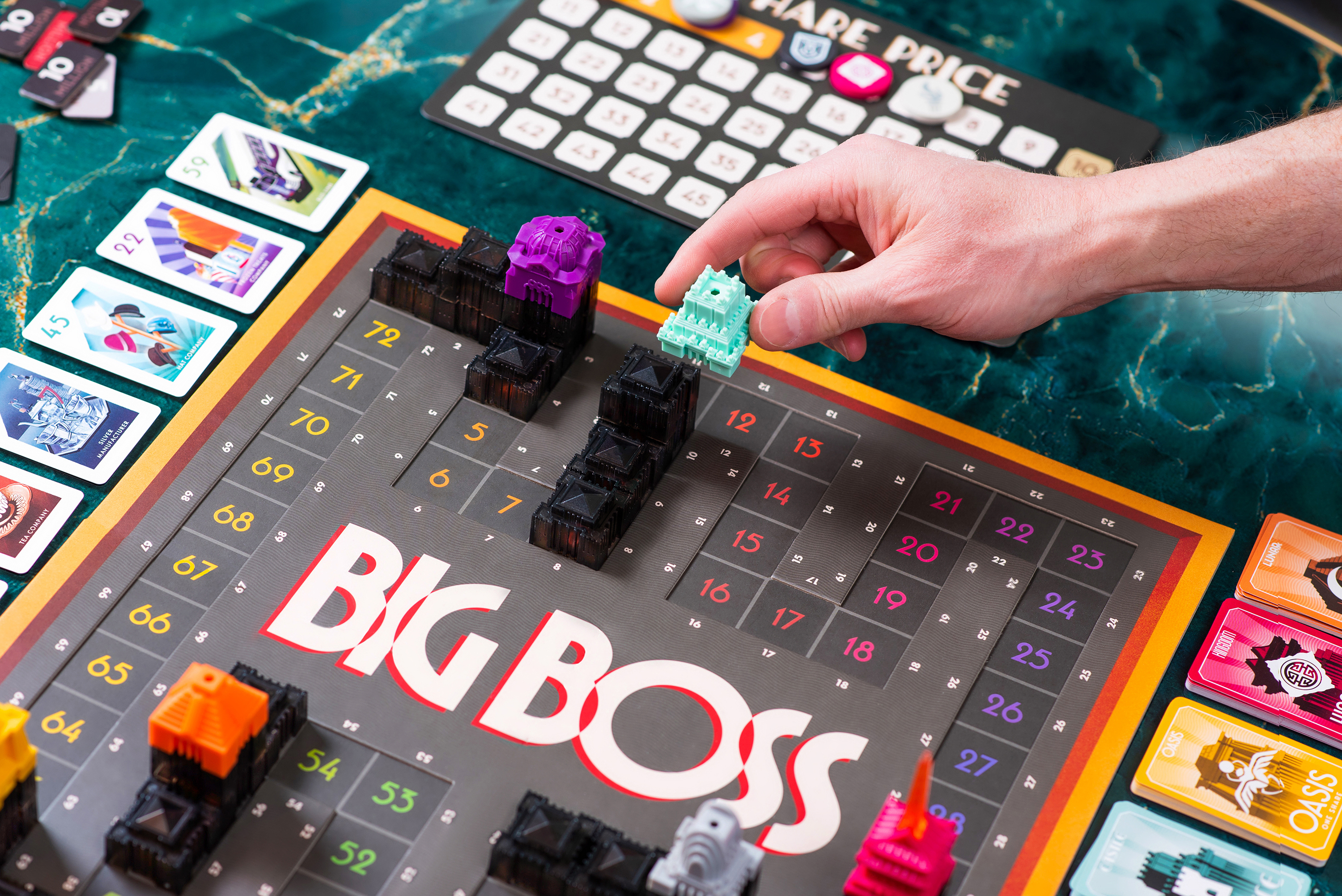
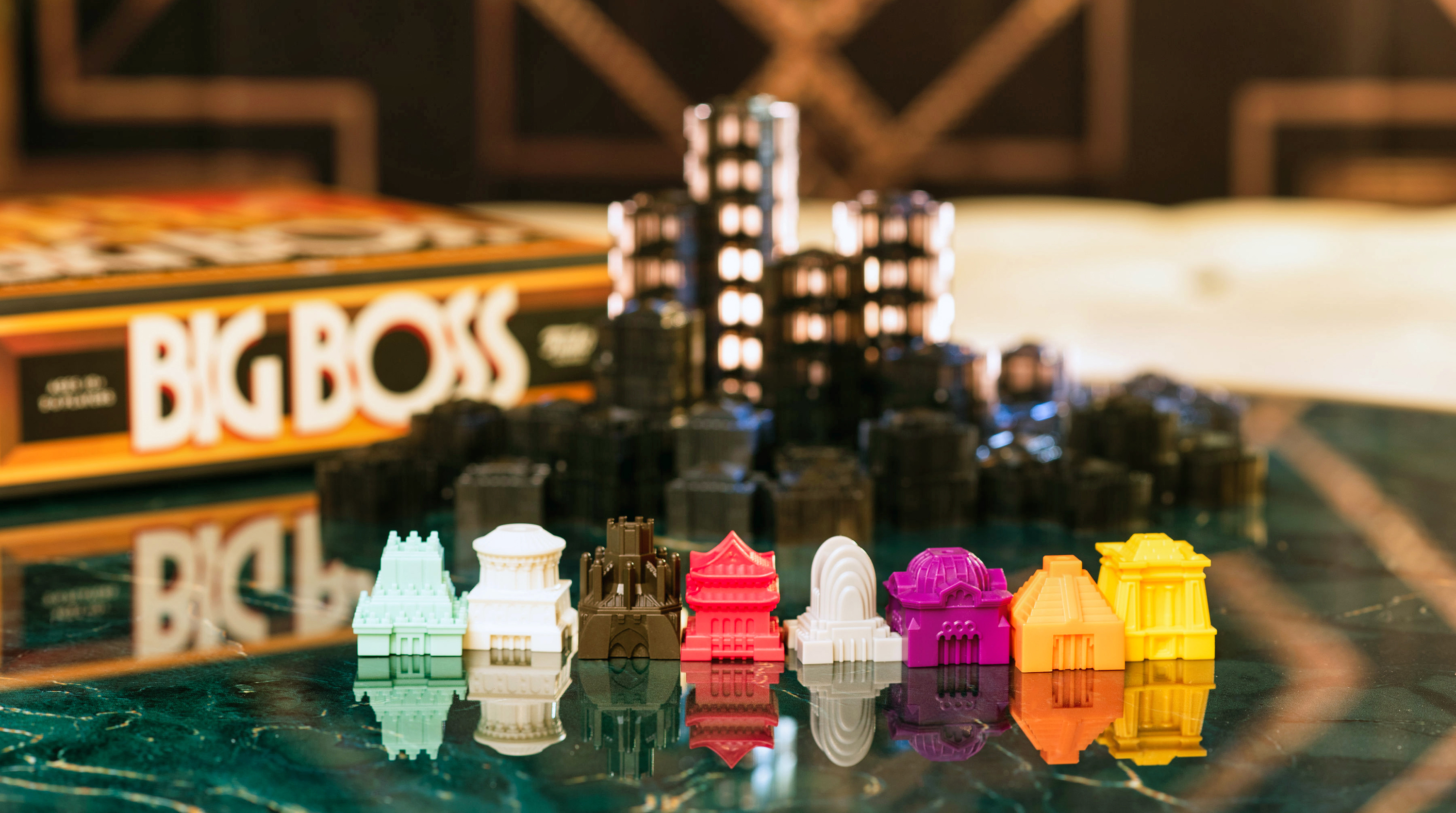
Kat: Yes, the board itself is a sturdy, heavyweight cardstock, with the numbers easy to read. There’s also a little colour coding, with certain businesses all being in the same corporate sector, such as the Chocolatier, Cookie Company, and Mixed Nuts Company. Each building is then a smoky grey plastic – an interesting colour choice that gives an urban metropolis quality. We tested how good they were at stacking, and they are strong enough to support a very tall tower, though 4 levels are the maximum able to be built in the game.
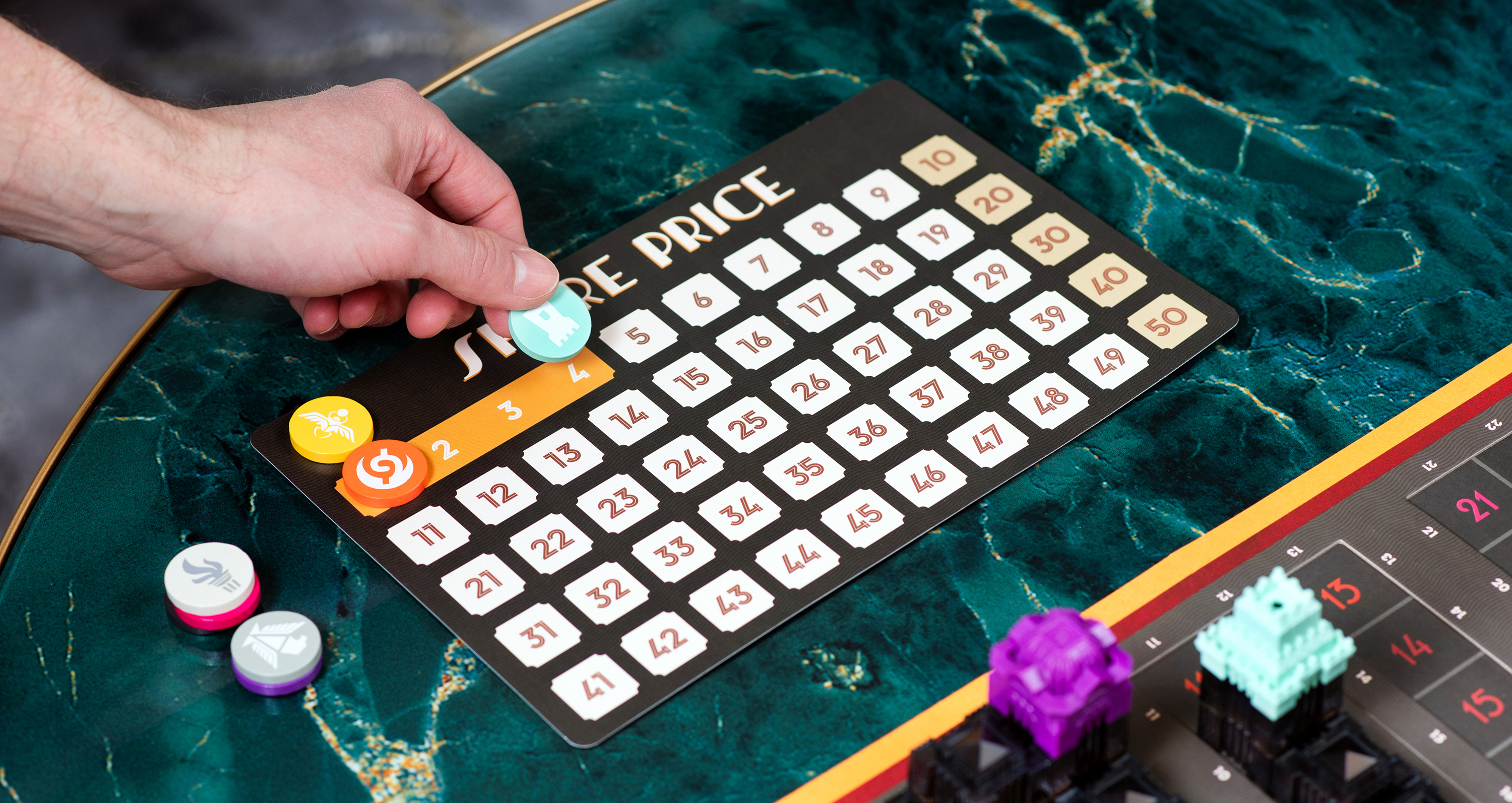
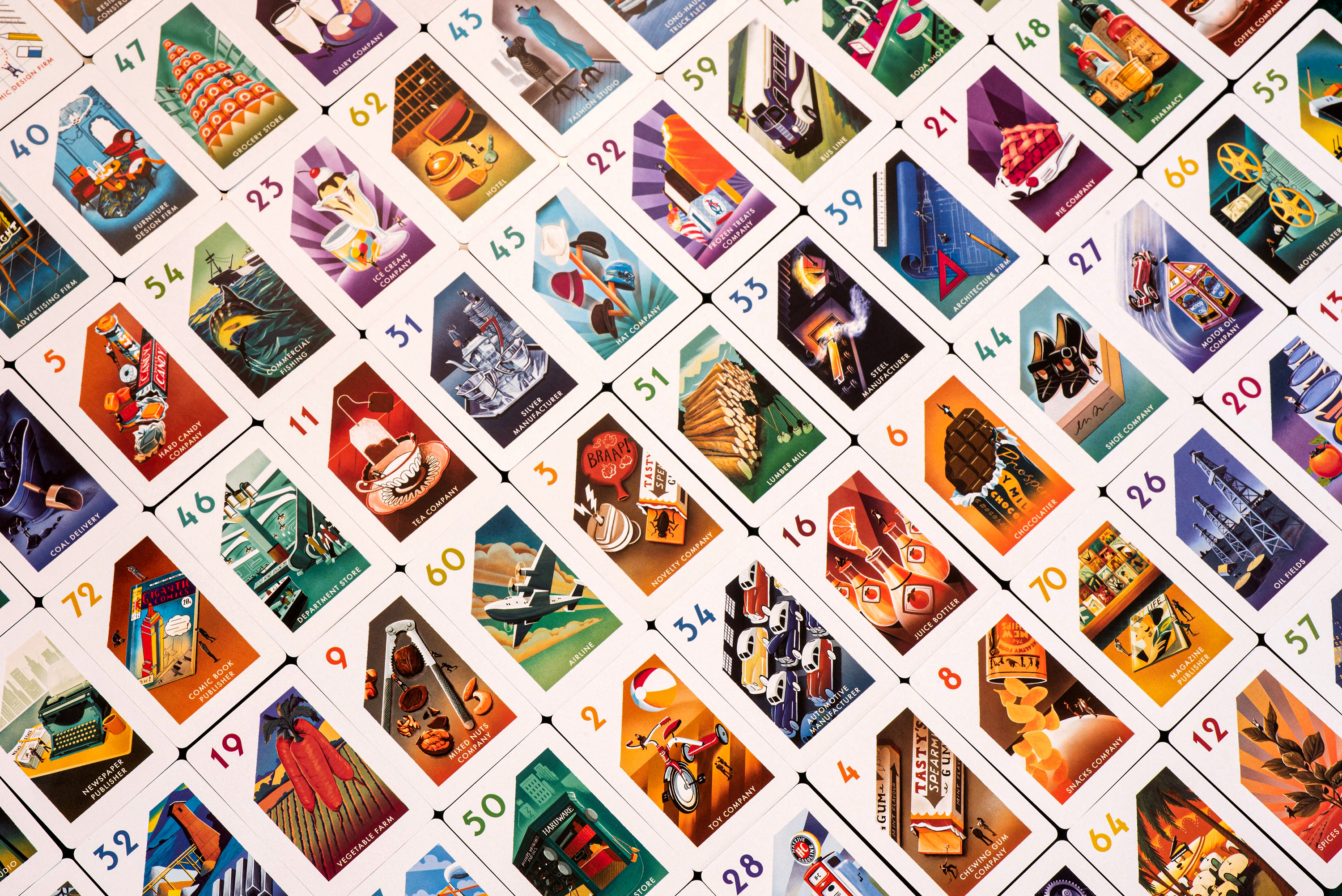
Then the artwork on the cards is also very in style with the idea of the age of industry. They’re a retro style, using muted colour tones, and the artwork feels like a poster or logo to advertise a corporation. These graphics basically speak for themselves because they are simple yet effective. Even at a glance you can tell whether something is a movie theatre or a lumber factory. In fact, our only slight complaint was the stocks and shares tracker. Rather than having the company meeples on a board, the stocks and shares tracker is just a cardstock similar to the actual cards included. However, that’s a very minor thing and probably personal preference. Mark, do you want to explain how shares are important to this gameplay?
Mark: I shall put my stock market hat on and do my best! So, as each company grows, so does its worth. If you build upwards – something we didn’t do much in our first game but realised the benefits of when we reflected – those shares go up even quicker in value. As you build, you have the option to buy stocks within the company. The more you buy, the more you build, the more those stocks are worth and ultimately lead you closer to victory. Knowing when to buy stocks and when to save your money to buy cards is a very fine balance. Ultimately, you are investing your money in the hopes of gaining more back.
Which leads us on to merging. As the businesses grow (there are six in all), they will start to meet each other. When they do, this will trigger a merge, with the bigger company taking over the smaller. This ups the value of the bigger company and those with shares in the smaller, get the share cost that it was currently at. Knowing when to trigger a merge to get the most payout is again crucial and this all depends on who gets the key card that will join the two companies together. It probably shouldn’t be, but I found the merging of companies to be a rather exciting moment in the game, right Kat?
Kat: Seeing those stock cards rake in the millions (sadly only game currency) was extremely satisfying! Knowing when to buy shares is the key to this game. Getting them early can result in a huge pay-out, though you’re taking a risk in assuming that that company will merge with another. Although there are plenty of building pieces, this is a big board, and there is no guarantee that your buildings will merge up during the game.
This leads us to another tactic of the game. You’re investing in all the businesses in play, whether or not you established them. As long as you add a building to a company then you can buy shares in them, even if your opponent sets it up. There’s nothing to stop you from adding a radio tower (which is limited to two per player and counts as three shares) to a different business either. I say opponents, but Big Boss is quite a friendly rivalry rather than cutthroat millionaires vying for conglomerates. It’s also a lot friendlier than Monopoly if you need to avoid family feuds. What did you make of the player interactions Mark?
Mark: All good board games have player interaction that is fun and making sure everyone is having a good time, not arguing! In Big Boss everyone is working together to create this metropolis and increase the value of each business. With such quick rounds, with such careful planning on your own part, you have little time to try and remember which companies your opponents have heavily invested in. In our game, it wasn’t even a concern, it was more about trying to optimise our own investments. There is such excitement to just making this board come alive. You’re eager to see where is going to be built next, is a merge triggering, what card may or may not have your opponent drawn? I’m sure this will change with future play throughs, but I think that sense of wonder will always remain.
Talking of repeat playing, this game has a huge amount of replay ability. You are never sure which cards you will get, where starting companies will be placed, how your opponents will react, what their strategy will be. This is a game that begs revisiting again and again. What we all thought was a really nice touch, was that the original rules to the game are included in this revised version of the game. It changes things just enough to create yet more variability should you wish. For us Kat, I think we are very happy with the revised rules?
Kat: The revised rules are easy to understand and quick to teach, making this game great for kids too. There’s a little bit of maths, so there’s some great educational aspects to it, though not so much as to be challenging. Most of it comes at the end of the game, when the final building is placed, triggering players to cash in their shares and count up their fortunes. While Big Boss is certainly a step away from the usual Funko games, which are typically pop culture related, that’s what makes this game so refreshing. It’s truly unique within the Funko catalogue.
Speaking of licensing and themes though, we mulled over whether Big Boss could suit an intellectual property. We thought that the mechanics of the game would be perfectly suited for Gotham City featured throughout the Batman films. Just imagine building Wayne Tower or investing in Gotham City’s docklands? Meanwhile Joker cards could let you steal a hand, or Batman himself might protect you. We’re pretty sure Big Boss is going to surprise most gaming fans, and we’d love to see more from this game. Mark, any final thoughts on Big Boss?
Mark: Rear Window, Star Wars: Rivals and now Big Boss. We are seeing a huge shift in Funko Games to some more serious, deep-thinking games that are really showcasing what this company is capable of producing. This year has seen some impressive releases and Big Boss is certainly one of them. For a lot of people, I’m sure the idea of stocks and shares might seem like something to steer clear of, but I guarantee that once you start playing, you’ll see the depth of the mechanics that are found here.
With an RRP of £33.00 ($34.99), I think you get a lot of gaming experience for your money. Funko Games are really setting a standard as to what to expect in terms of game quality, the number of plastic components, the dual layer main board, even the card stock (which I love the feel of and is great for shuffling), speaks volumes to the attention to detail that this company has put into this translation. Also, this is a rare game that allows for up to six players and I really can’t wait to play with so many people to see how that really ramps up the tension!