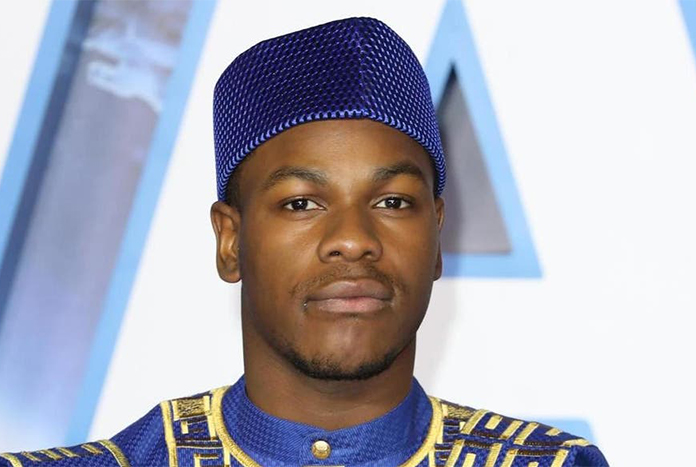
John Boyega has been outspoken about systemic racism in Hollywood, and last year he discussed how his character in Star Wars was sidelined. Now, in a new interview with NPR’s Fresh Air guest interviewer Sam Sanders, Boyega reflects on the comments he made and the attention they received.
SANDERS: So you were smaller than the white actors on the poster if you were there at all. How did that feel?
BOYEGA: At the time, I would – you know, I’ve spoken about it before, spoken about it many times. And, you know, I just was kind of like, well, I’m in the movie. Like, you know, much like what I said when I had to respond – And I guess a lot of people forget that, at the time, I was the only Black guy on the cast.
SANDERS: Yeah. And a black stormtrooper at that. It’s a big deal.
BOYEGA: Right. Yeah. And like everybody else is getting announced. And there’s no people saying that they want to boycott the movie. There’s no weird messages. I’m not – you know, people are not, you know, calling you all types of names, you know. So the experience in itself becomes quite unique for you, right? But as you go along and all these issues pile on top, you know, I just thought it was, you know, quite important to say something, so it’s not an elephant in the room. And I think that, you know, more conversations have even been bubbling with other actors now in different, you know, projects and franchises. And they just, you know – things that they noticed as well. And, you know, it’s a conversation worth having, to be honest.
GROSS: We’re listening to the conversation our guest interviewer, Sam Sanders, recorded with John Boyega. Boyega plays Finn in the “Star Wars” sequel trilogy. He stars in the anthology series “Small Axe,” which is streaming on Amazon Prime Video. We’ll hear more of their interview after a short break. I’m Terry Gross, and this is FRESH AIR.
(SOUNDBITE OF MUSIC)
GROSS: This is FRESH AIR. I’m Terry Gross. Let’s get back to our interview with actor John Boyega. He played Finn in the “Star Wars” sequel trilogy. His other films include “Attack The Block,” “Detroit,” and “Pacific Rim Uprising.” He won the Golden Globe for his leading role in the anthology series “Small Axe.” He played Leroy Logan, a real-life Black British police officer who joined the force in the 1980s to try to change the system. Boyega has been outspoken about systemic racism in society and in Hollywood. Last year, he was part of a Justice for Black Lives rally in London. And in an interview, he talked about how his character in “Star Wars” was sidelined along with the other characters played by actors of color. Boyega spoke with our guest interviewer Sam Sanders, the host of the NPR show It’s Been A Minute. When we left off, they were talking about Boyega’s comments about “Star Wars.”
SANDERS: You think it’s getting better? From the time you made those comments about “Star Wars” to now, do you think there’s been progress made? There’s so much discussion around visibility and representation in the industry.
BOYEGA: I’ve seen some amazing shows. I’m seeing some amazing creatives growing. But as I even grow in my own education, I’m starting to look behind the scenes, you know? I’m starting to look about these teams and sometimes the streaming platforms that could sometimes play into the diverse game just through acquiring projects. Like, you know, is the diversity coming from the decision-makers on your team, you know, the execs, the producers? Or is it coming through you acquiring, you know, Black projects and just buying them?
SANDERS: Which is preferred? Is it better when these big studios acquire, you know, content of color from creators of color? Or should they do a better job of just integrating that stuff into their entire structures?
BOYEGA: I think – yeah. I think they absolutely, absolutely need to integrate that into their structure. And we’re already seeing that happening – right? – on some fronts. You gain more perspective when you hire the individuals on ground to kind of give birth to these ideas, who also, you know, kind of are thinking parts for what’s next, what entertains us, you know? And I feel like you’re getting to a point now where a lot more people are interested in entertainment. You know, there is also a responsibility to gain access to these people and try to, you know, change the actual structure so that you don’t need to prep, scramble and be like, we need more Black movies.
(LAUGHTER)
BOYEGA: You know what I mean? Stop scrambling man. Try and get the structure, you know, organic, in a sense.
SANDERS: Well – and then it raises another question. How do you make it? And, like – I don’t know. I think a lot. Instead of saying, like, how do we make Hollywood work better for people of color? It’s like, Hollywood was not created for people of color. Hollywood was created for white people by white people with the whims of white people. I’m just saying what it is. And maybe there’s a moment to imagine something different and new. And I don’t know. Do you think the industry is going that way? Like, just saying, well, how do we make something new?
BOYEGA: Yeah. I’ve been brainstorming that myself. As you know, I set up my own production company a good few years ago in light of kind of, like – and this is even before the protests or any kind of things like that. I just set it up to gain my independence and to be a part of the creative, you know, process and just to see the way in which the industry is changing, collaborations that are being had. You know, there’s a lot of change, you know, here and there. But for me, it does come down to that fundamental question and statement. And it’s something that I’ve been brainstorming, you know, taking apart, putting it back together. I recently listened to a Tyler Perry speech. He spoke about ownership. And that in itself makes you go, oh, damn. Like, you’re just like, OK, OK.
What – like, what is being said now about what we’re doing? Because I truly believe that when you give us a chance to tell our stories and give us the quality, I feel the industry would change forever. And it’s continuously doing that. But I guess, you know, I don’t feel like behind the scenes, we’re completely at the forefront of those discoveries and kind of projects, you know, all the time. You know, and shouts out to production companies like Macro, you know, by Charles King. Like, you know, what they just did with “Judas And The Black Messiah,” man, like, these guys are kind of like – they have that vision. I think, recently, he said that, you know, if you think about Universal and Disney, that’s what he’s looking to aim toward. And for me, that’s what I’m talking about right there. I need the guy on the top to be able to be Black enough to make some decisions (laughter).
SANDERS: OK. I’m rooting for it.
Read/listen to the interview in full at the link below.