Our friends over at Brickset.com have published the first part of an anatomy of Star Wars Aliens written by Brickset user The_Rancor, aka Toby and it is well worth a read.
What Lego fan doesn’t love the humble minifigure? Perhaps you like pirate minifigs, knight minings, or prefer Classic Spacemen? Or perhaps like me, ever since setting eyes on a cantina or two you’ve been a sucker for the more unusual, alien minifigures, more specifically from Star Wars.
Having dabbled in unlicensed aliens & UFOs, the introduction of Star Wars opened up a colourful universe of aliens (humanoid or otherwise) for our Lego characters in 1999. Now the theme is over 20 years old we’ve had over 60 non-human alien species, around 3 new on average each year. I wanted to take a look back at how they’ve been introduced, specialised elements and whether they’ve improved over time – which isn’t always an easy answer.
First off and to address the pedantries, I’m going to note what I’m listing as an alien minifigure in SW. I’m including all non-human sentient species in Star Wars which still have identifiable organic features. So for example the B’Omarr Order could be any species, so I’ve ruled them out, whilst cyborgs like Grievous would be ruled in. I’m also not including pets (e.g. Salacious Crumb), wild animals (Wampa) or beasts of burden (Dewback) in this piece but I won’t rule out looking at them later.
Many aliens have returned multiple times since their first introduction, often for the better, sometimes exactly the same, and sometimes for the worse. This article focuses on species first introduced in the years 1999-2004, when many of our classics arrived and also had the most time to change over the years – which I’ve shown in minifigure lineups.
1999
The first year of Star Wars gave us 4 species, all introduced in Episode I – Gungans, Zabraks, Dugs and Xexto. We’re in the early days of custom minifigure moulds, and they were often left unprinted. Use of Sebulba’s initial dark grey one-piece mould was limited with just a leg clip and a base, but it did capture the Dug’s ‘walking arms’ and long facial features.
I felt Lego later improved on this in 2011 with movable walking arms and a detailed print capturing his skin tones, eyes and clothing. Gasgano, like Sebulba, is also our only ever Lego character of his species. The Xexto’s four arms & thin body were represented, albeit using a white Lego laser tool and droid arms that made the lower body look cut off, mostly due to his intended use sitting in his pod.
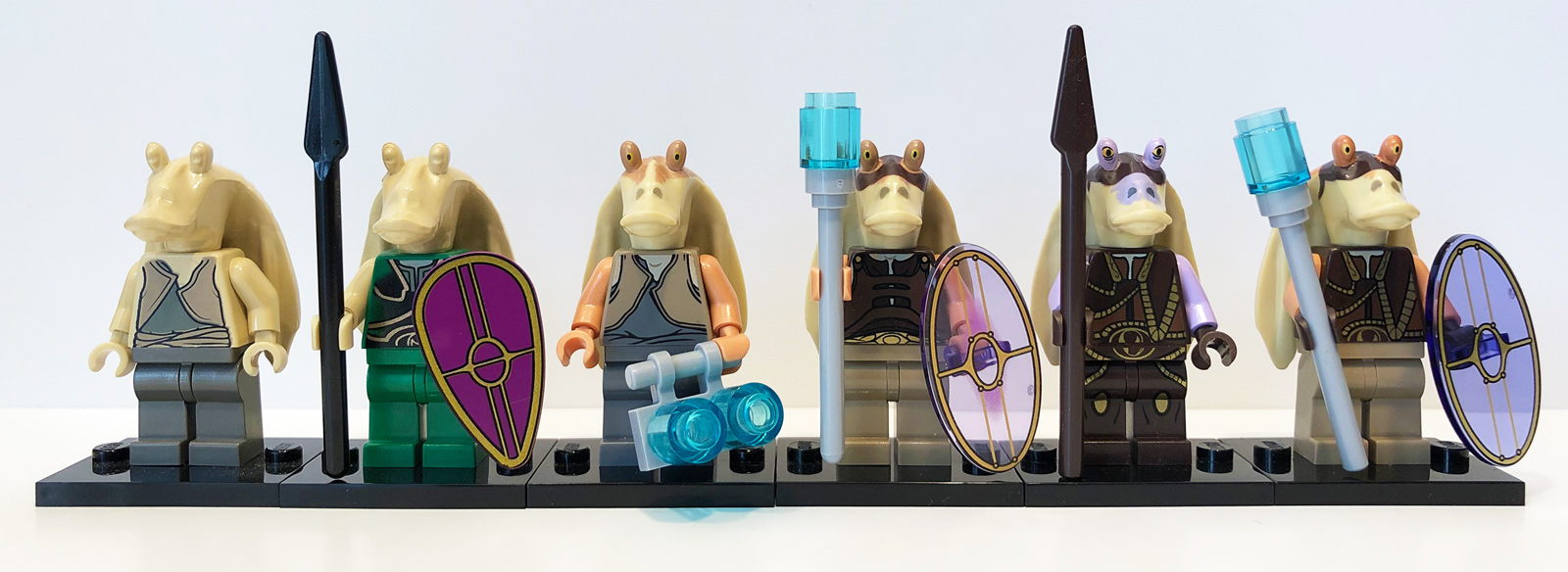
Gungans were first represented by everyone’s favourite – Jar Jar Binks as a regular minifigure with a dedicated head mould. The amphibious species are known for their eye stalks, bills and haillus (finn-like ears) and the head mould captured them so accurately that it’s never been changed (bar printing) for a number of warriors including Captain Tarpals since – nor should it need to! Zabraks meanwhile started with Maul but have since been represented as 5 other named characters, with Iridonian, Dathomirian, male and female variants.
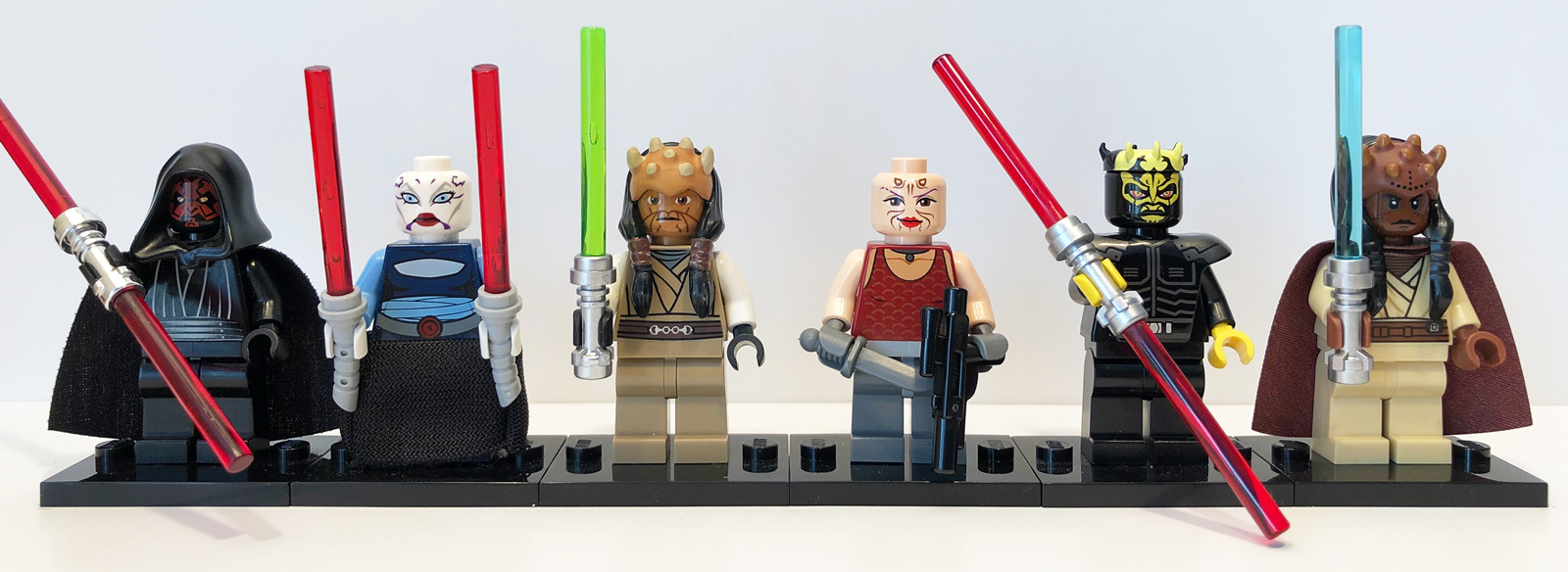
Zabraks initially had no dedicated moulds, relying on detailed head printing or hoods – but by 2011 two new horned elements were introduced – one with hair used for Iridonians and one without used for tattooed Dathomirians. I’d say these strike the perfect balance between film accuracy and ‘Lego’ aesthetics.
2000
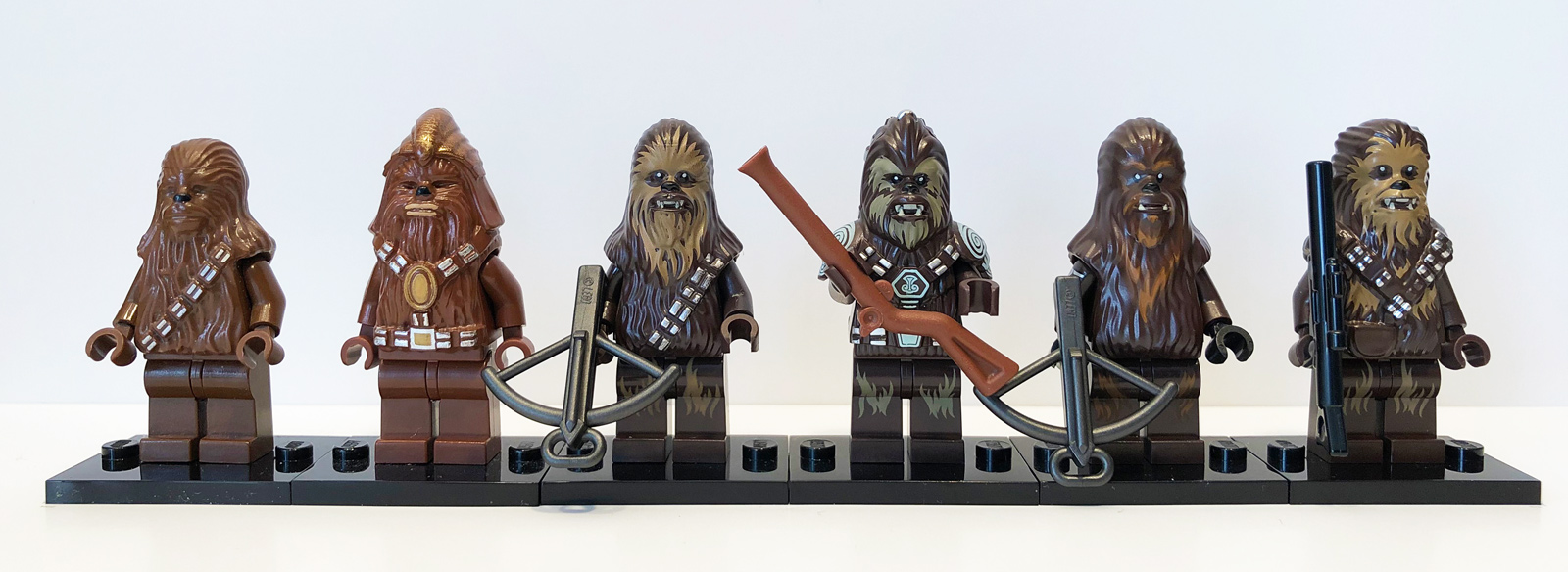
We had two new species this year, though one was Wookiees in the form of Chewbacca! Much like the Gungan heads, the original sandwich board mould for a Wookiee’s tall furry body with an ammunition bandolier has stayed in use since its introduction, taking brief diversions for Wookiee warriors (such as Tarfful) or Chewbacca’s look in Solo. But I expect to most the original is best, which only used printing to pick out the nose and bandolier without multiple fur colours or armour.
We also had a Glymphid this year in the form of Aldar Beedo. The original ‘Aquanaut Battle Droid’ design captured little of the creature’s body, except perhaps long thin arms and legs – probably regarded as one of the worst ever Star Wars minifigures. A single piece tan mould replaced this in 2001 which captured the Glymphid’s long snout and slender body better, but had no grabbing arms.
2001
The only new species to be introduced this year was Toydarians in the form of Watto. The initial unprinted sandwich board mould included wings and a head with a short ‘trunk’ but combined with full length minifigure legs it made the alien look tall with a small head. This was rectified in 2011 when short legs and a new detailed mould with pronounced belly were used, though I’d still like to see another character like King Katuunko.
Read more of the article here.
Please support Jedi News by purchasing your LEGO here for the UK, USA and Canada.