


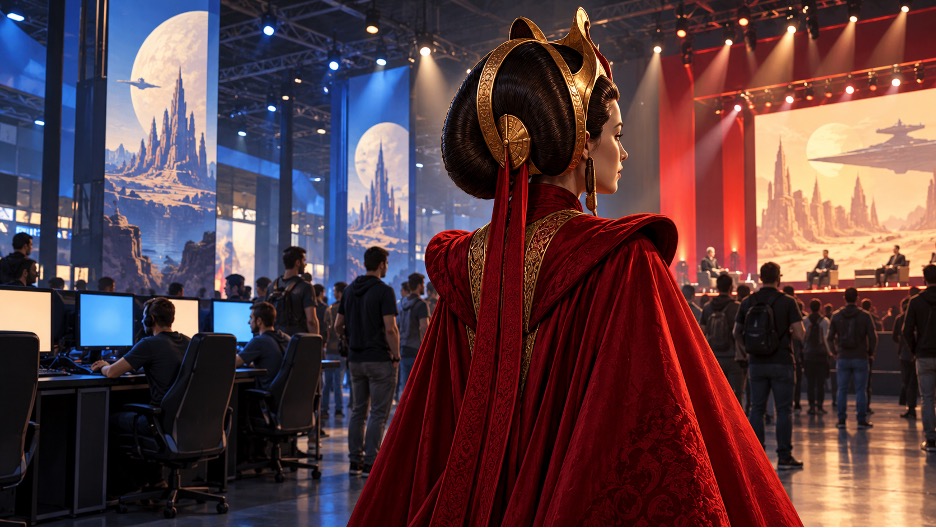
At Star Wars Celebration, a costume, a fan-club presentation, and a discussion of a favourite game can all belong to the same weekend. Each offers a different way to take part in a shared interest. Gaming festivals bring a comparable mixture of activities together. Their connection with franchise conventions lies in the room they make for fans to watch, play, and contribute work of their own.
DreamHack’s May 2026 account of its history traces its beginnings to a school basement in Malung, Sweden, in 1994. Bringing computers became a defining tradition. LAN means local area network: computers connected within a limited physical area. BYOC, or bring your own computer, describes who supplies the equipment. Attendees helped fill the venue by bringing the computers they would use.
A gathering grows beyond its players
The 2025 Knockout series, part of DreamHack’s events in Counter-Strike, included tournaments in Atlanta and Stockholm. Competition gave the wider gathering a contest to follow, with teams, matches, and results. Players at their keyboards and spectators watching them took different roles around the same game. The tournament supplied a common focus within a festival that also accommodated activities beyond competitive play.
A tournament is one part of that wider visit. Match schedules and results organise the competitive strand; the surrounding festival leaves room for other activities. Fans can follow a contest while also attending for costumes, creators, or a community they already know.
DreamHack’s retrospective describes its development through gaming, esports, and, more recently, creator communities. That progression widened the subjects around which people gathered. Online creators add audiences built around videos, broadcasts, and commentary, extending the gathering beyond the people playing a game and those watching its competitive matches. Its festival description places music and cosplay alongside esports and creators, bringing different kinds of performance into the same venue. For fans accustomed to following games and creators on screens, the festival gives those interests a shared physical setting.
As a festival widens, its original activity can take a different place within it. In that May 2026 announcement, DreamHack said it would end its festival BYOC component and move towards provided equipment, including PC Freeplay. Shared play remained part of its stated plans, with the organiser planning to supply the computers for that component.
Costumes bring a personal interpretation into view
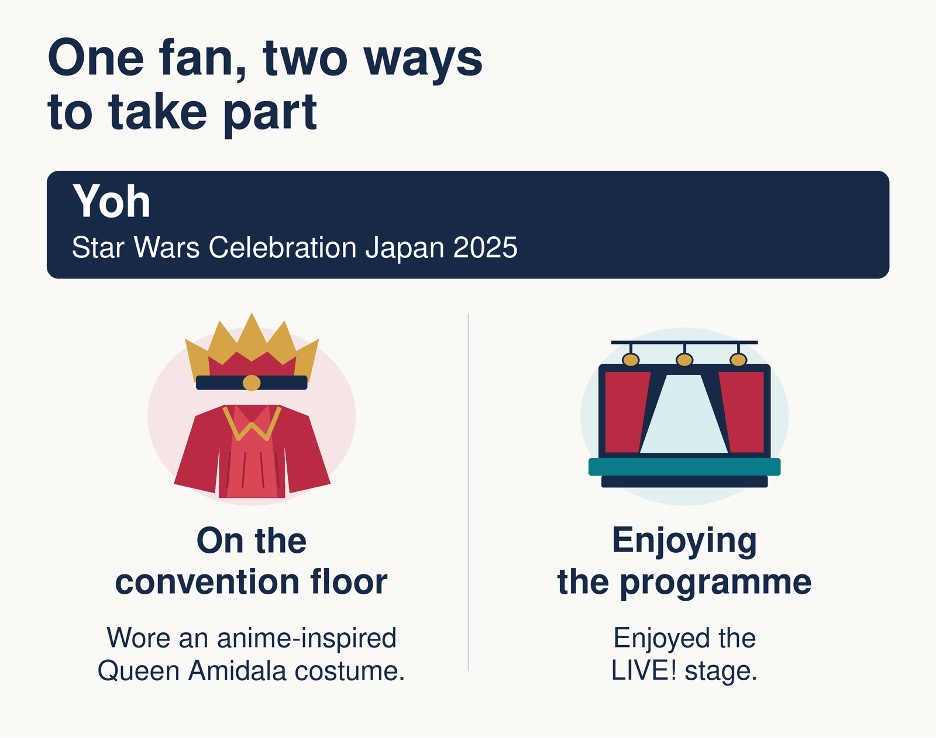
At Star Wars Celebration Japan 2025, Tokyo resident Yoh wore an anime-inspired interpretation of Queen Amidala inside Makuhari Messe’s halls. StarWars.com’s profile of fans at the convention described a gold and red costume whose intricate details evoked Naboo royalty. The anime styling offered a different interpretation of the familiar character, combining two visual influences within one outfit. Yoh was attending her second Celebration.
Yoh enjoyed the LIVE! stage, according to her interview. She brought something of her own to the convention and also wanted to watch what other people were presenting. Her account shows how the same attendee can contribute to the show and be part of its audience. Cosplayers and spectators need not be separate groups.
The finished costume was part of the convention’s visible culture, alongside the appearances and presentations arranged by its organisers. Fans therefore contributed something other visitors could see without needing a place on a panel. Costume work extends that participation beyond the formal stage schedule and into the public spaces of the event.
Costumes also have a place within DreamHack’s festival identity. This gives gaming gatherings a concrete connection with other forms of fandom: characters and visual designs provide material for people to interpret and wear. Celebration brings those activities together around Star Wars, while a gaming festival accommodates multiple games and communities.
Fan knowledge becomes part of the programme
At Celebration, the range of fan interests is visible in the subjects given stage time. Jedi News’ Fan Stage schedule for Japan 2025 covered April 18th – 20th. The advertised programme included a presentation by costume fan groups, with organisations such as the 501st Legion, Rebel Legion, and Mando Mercs involved. Other sessions concerned Amidala costumes and the practical work of making functional outfits.
The advertised sessions addressed both the knowledge behind a costume and its finished appearance. Fan groups were scheduled to discuss their activities, while craft sessions concerned how costumes were made. Those topics drew on knowledge developed through the contributors’ involvement in Star Wars.
The programme also listed a Malaysian shadow-puppetry team, Fusion Wayang Kulit, discussing its Star Wars adaptations. Their planned talk covered a project that had begun fourteen years before Celebration. That placed a traditional performance form beside games and costume work. Different creative skills gave familiar material another public form, with the programme making room for what those contributors had developed.
Gaming was already part of that conversation. The schedule listed a session on the stories of Jedi: Fallen Order and Jedi: Survivor, featuring Linds and Savi, hosts of the Stardust Records podcast, and cosplayer Yasmine. The advertised discussion focused on hope, found family, and perseverance, treating the games as stories within the wider saga. Here, games supplied characters and stories to discuss together, rather than a contest to decide.
That is a recognisable convention role for gaming culture. Playing produces experiences that fans can discuss, interpret through costumes, and build gatherings around. DreamHack’s development illustrates how a gathering can expand beyond its original activity while retaining shared play. A game remains something to play, while also becoming something people bring into their conversations, creative work, and time together.