


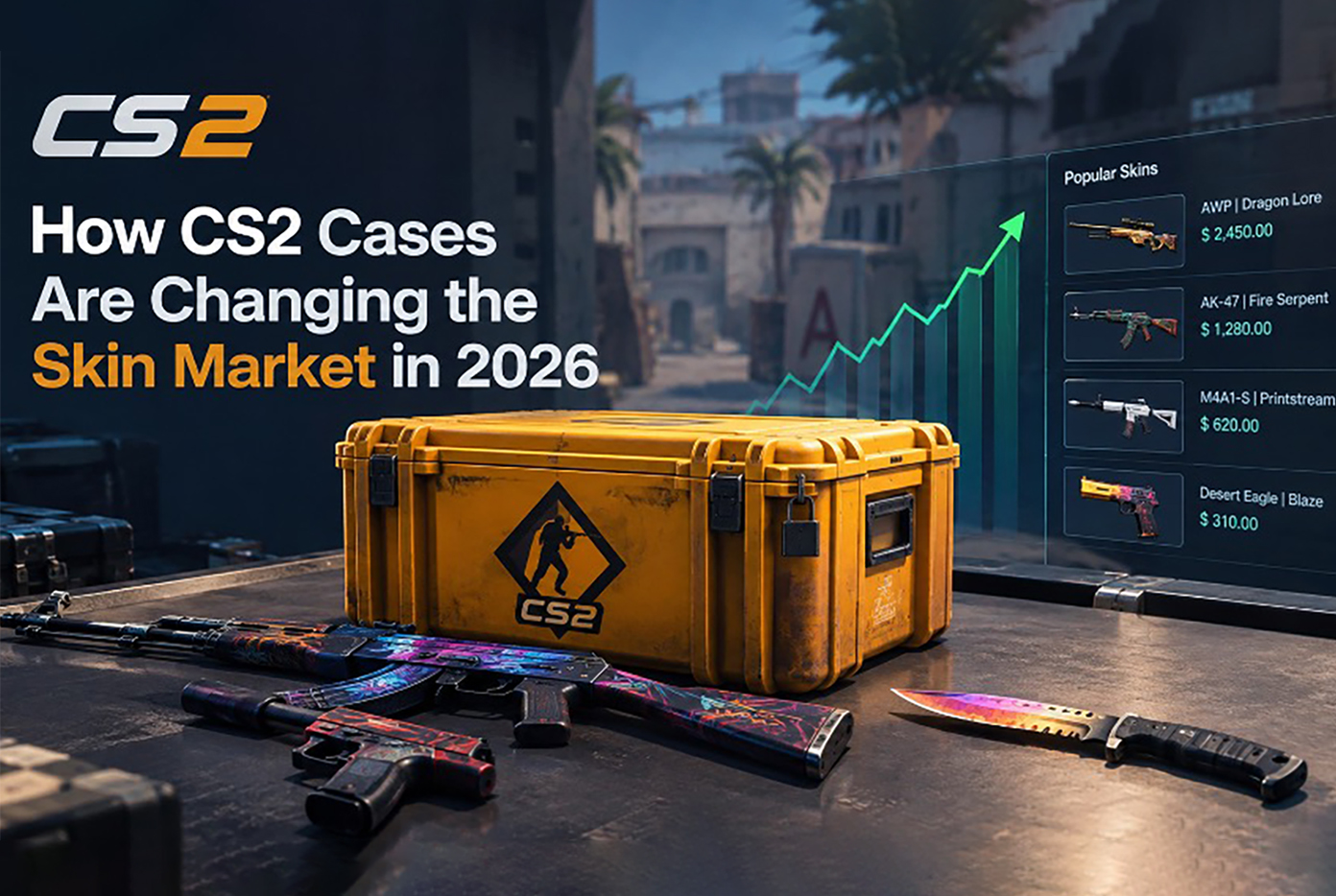
The role of cs2 cases has changed as the Counter-Strike 2 skin market has matured. Cases are no longer just a way to obtain random cosmetic items. They also affect skin supply, player spending, trading activity, and the prices of items already in circulation. In 2026, understanding this relationship is important for anyone who follows the in-game economy or regularly trades skins.
Why Cases Matter to the CS2 Skin Market
A case creates a direct link between opening activity and the supply of cosmetic items. When players open cases, new skins enter circulation. Most drops are relatively common, while rarer items appear much less often. This creates different levels of supply across the market.
The effect becomes more noticeable when a particular case remains popular for a long period. Frequently opened cases can introduce large numbers of lower-rarity skins into player inventories. At the same time, expensive rare drops remain limited because their drop rates are much lower.
This process affects prices in both directions. A common skin with a large supply can face lower prices, while a desirable rare item can remain expensive even when it comes from the same case.
How Case Supply Influences Skin Prices
New Supply and Market Pressure
When a case is opened heavily, the market receives more items from its collection. If many players sell these skins instead of keeping them, the additional supply can put downward pressure on prices.
However, the impact is not identical for every item. A skin with strong demand can absorb additional supply more easily than an item that few players want. Float value, finish, weapon type, rarity, and visual popularity can also affect how quickly an item sells.
Older collections can behave differently. If fewer cases are being opened, the supply of new items from that source becomes smaller. Existing skins can then become more important because traders have fewer opportunities to obtain the same items through fresh openings.
The Difference Between Cases and Direct Skin Trading
Cases also influence the wider marketplace because they create new inventory rather than simply moving existing items between players. Direct trading, by comparison, usually transfers an existing skin from one inventory to another.
This distinction matters when comparing modern CS2 trading with the older market for csgo skins. The basic principles of supply and demand remain similar, but the conditions surrounding item supply can change as Valve introduces new content, adjusts case availability, or changes how players receive items.
A trader looking only at the current listing price may miss this supply factor. It is often more useful to ask where new copies of an item are coming from and whether that source is becoming more or less active.
What Happens When a New Case Appears
A new case can temporarily shift attention across the market. Players may open it because they want newly introduced finishes or specific rare items. This can increase the supply of the new collection while also changing demand for older skins.
Some players may sell existing inventory to fund openings. Others may move funds toward newly released items. As a result, price changes can appear outside the new case itself.
The effect does not necessarily last. Once initial interest declines, opening activity can settle at a lower level. At that point, prices are influenced more by the actual demand for individual skins and the remaining supply.
Cases, Trading, and Gambling Are Different Activities
Cases are sometimes discussed alongside csgo gambling, but the two should not be treated as the same market activity. Case opening is a built-in item acquisition mechanic, while gambling sites have historically used skins or their monetary value in separate betting systems.
The distinction is useful when analyzing prices. Demand generated by collectors, traders, and players who want specific cosmetics is different from demand created by gambling-related activity. Treating all skin transactions as one category can lead to incorrect assumptions about why prices move.
The broader term cs cases is also commonly used when discussing case contents, prices, and opening trends. The underlying economic principles are still the same: supply, demand, rarity, and player interest determine how much an item is worth on the market.
What Players Should Watch in 2026
Players following the market should pay attention to more than the headline price of a case. The number of listings, recent sales, item supply, and demand for individual skins provide better context.
It is also worth watching updates that affect item availability. A change in how cases are distributed can alter the flow of new skins into the economy. Similarly, a new collection can redirect demand without directly changing the characteristics of older items.
Historical prices can provide useful context, but they should not be treated as a guarantee of future performance. The CS2 market depends heavily on player behavior, content releases, and the amount of inventory available at a given time.
The Practical Impact of Cases
Cases remain one of the mechanisms that continuously add cosmetic items to the CS2 economy. Their influence is strongest when opening volume is high or when a new collection changes player demand.
For players, the practical lesson is simple. Before buying or selling a skin, consider how easily new copies can enter the market, how much existing supply is available, and whether current demand is based on long-term interest or a recent release.
Understanding these factors gives a more realistic view of the market than looking at price alone. In 2026, cases are not separate from the CS2 skin economy. They are one of the mechanisms that help shape its supply, pricing, and trading activity.