


I bought Monument Valley on a flight to Denver in 2014. Finished it before we landed. Paid five bucks, got one of the best gaming experiences I’d had that year, and immediately texted three friends telling them to buy it. That kind of transaction used to be normal on phones. You’d browse the App Store, spot something that looked good, drop a few dollars, and own a complete game. No strings, no currency packs, no “watch this ad to continue.”
That was ten years ago. Might as well be a hundred.
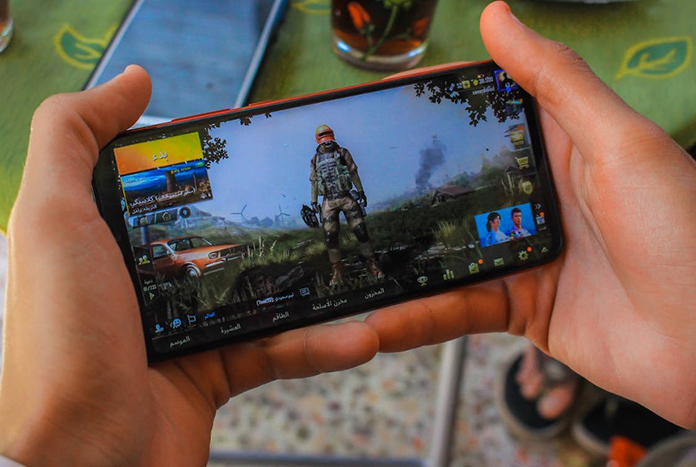
Scroll through the top-grossing charts on either app store today and you’ll find exactly zero pay-once games. Not one. The entire list is free-to-play: Honor of Kings, PUBG Mobile, Monopoly GO!, Candy Crush. The mobile market pulled in about $92 billion in 2024, and in-app purchases accounted for 95% of all player spending. When eMarketer surveyed gamers, 82% said they’d rather play a free game with ads than pay upfront for one without. The paid model didn’t just lose. It has become so obliterated that most players under 25 don’t even know it exists and prefer to jump straight to the free odds 96 download.
And the decline keeps accelerating. New game releases on app stores fell over 40% between 2023 and 2024. The number of new titles earning over $1 million annually dropped from 686 in 2022 to 399 in 2024. There’s a reason for that collapse, and it’s not complicated: the economics are brutal, and they’ve been brutal for a while now.
The math that killed everything
Here’s what premium developers are up against. A free-to-play game can extract thousands of dollars from a single dedicated player over months or years. A premium game gets $5 to $10, once, and that’s it. Take a game with a million downloads. If it’s free-to-play with decent monetization, it might generate six figures monthly, indefinitely. If it’s premium at $5, it earns $5 million total before the platform takes its 30% cut, and then revenue basically flatlines. There is no second wave. There are no “live ops.” The game ships, maybe gets a small sales bump during a holiday promotion, and slowly disappears.
Developers summed it up pretty bluntly a while back: they’d love to keep making premium games because the design process is cleaner without freemium mechanics, but “we consider the market too big of a risk.” That’s not a fringe opinion. Talk to anyone making mobile games independently and you’ll hear some version of the same thing. They’re not choosing free-to-play because they love designing gacha systems. They’re choosing it because the alternative is financial suicide.
But honestly, the price tag isn’t even the real killer. Discovery is. Something like 126 new games hit the stores every day. Marketing now eats 30 to 50 percent of a mobile game’s total budget, up from maybe 10 to 20 percent a few years ago. Free-to-play studios can stomach those costs because the revenue trickles in over years. A premium developer needs to make the money back in the launch window, and if the algorithm doesn’t pick you up in that first week? Good luck. Your chances of getting featured by Apple or Google are roughly half a percent. For a $7 puzzle game with no marketing budget, the odds are functionally zero.
What happened to the studios that believed in this?
This is the part that actually makes me a little angry, if I’m being honest. Between roughly 2012 and 2016, there was a genuine creative movement on mobile. Studios like ustwo with Monument Valley, Simogo with Device 6, dozens of indie teams making things specifically for touchscreens that were thoughtful and complete and genuinely artistic. These games won awards. They ended up in museum exhibits. People wrote serious criticism about them the way they’d write about indie film.
And most of those studios either pivoted to free-to-play, moved to PC and console, or just… stopped. Not because the games were bad. Because you can’t sustain a studio on $5 purchases when the entire ecosystem is optimized to make your game invisible.
The app stores themselves shoulder a lot of blame here. Their algorithms reward engagement metrics, download velocity, revenue per user. Premium games, which are finite experiences with no recurring transactions, score badly on every single one of those metrics. The stores are essentially telling developers: make something people never stop spending money on, or we won’t show your game to anyone. It’s not a conspiracy. It’s just incentive structures doing what incentive structures do.
Apple Arcade, for better and worse
If there’s a place where premium-style mobile gaming still has a pulse, it’s Apple Arcade. Two hundred-plus games, $6.99 a month, no ads, no in-app purchases. The catalog has some genuinely good stuff: Fantasian (from the creator of Final Fantasy), Sneaky Sasquatch, Stardew Valley+, Slay the Spire+. For families with young kids, it’s probably the single best deal in gaming right now. Your child can just… play games. Without being manipulated into spending money. What a concept.
But I have mixed feelings about what Apple Arcade represents. It exists because the open market failed premium games so thoroughly that they needed a trillion-dollar patron to survive. Developers get funded by Apple, which is great for them, but it means the entire premium mobile ecosystem now depends on whether Apple thinks the service is strategically worth maintaining. That’s not a market anymore. That’s patronage. And six years in, Apple Arcade still feels niche. The games are solid but mostly small-scale. If you want something with the ambition of what’s happening on PC or console, you’re mostly out of luck.
Where this leaves us
What’s really happened is that mobile and console/PC gaming have become different industries that happen to share a name. On PC and console, paying $60 for a complete game is normal and nobody blinks. Indie games like Balatro sell millions at a fixed price. The premium model is thriving there. On mobile, games are designed to never end. Daily logins, battle passes, seasonal events, live operations. The top mobile games don’t have conclusions. They have content calendars.
There are still bright spots on phones, though. Console ports keep arriving: Prince of Persia: The Lost Crown hit Android in 2025, GRID Legends launched in late 2024. Dead Cells, Minecraft, the GTA catalog, Balatro all sell as premium titles on mobile and do fine. Not “top-grossing list” fine, but “keeping the lights on” fine. The audience for paid games hasn’t vanished. It’s just tiny compared to the free-to-play ocean, and reaching those people without a recognized brand borders on miraculous.
I keep coming back to the growing backlash against predatory monetization. Players are getting fed up with manipulative mechanics. Regulators in multiple countries are poking at loot boxes and dark patterns. If that pressure keeps building, premium games might start looking less like relics and more like the reasonable alternative. Cross-platform releases help too: if a game already works as a paid title on Steam or Switch, porting it to mobile becomes a bonus revenue stream rather than a bet-the-company proposition.
I don’t think we’re going back to 2014. The market chose free-to-play, and that choice is basically irreversible at this scale. But I also don’t think the desire for honest, complete, pay-once games is going away. It just lives in the margins now, kept alive by stubborn developers and players who’d rather spend $7 once than get nickel-and-dimed forever. There’s something quietly defiant about buying a premium mobile game in 2026. Almost countercultural. I kind of love that about it, even if I wish it didn’t have to be.