


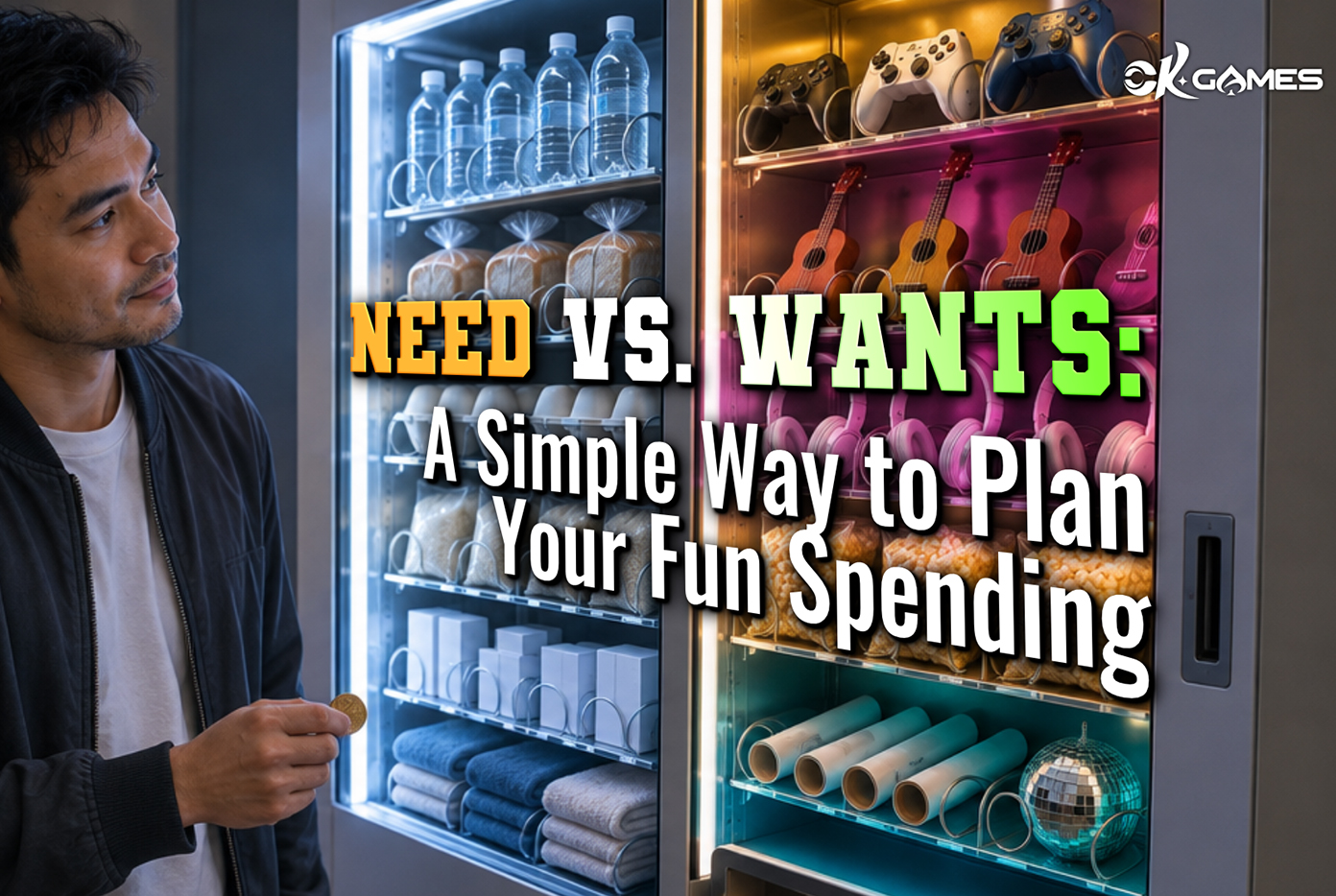
Financial problems revolve around the necessity or the desire of items. This might seem like a simple thing to do but the line becomes hazy quickly. You need a phone, but is it the newest model? Is the Internet a premium streaming bundle, even though it’s a necessity? It’s acceptable if a few leisurely rounds on Okgames end up in the “want” column. This article provides easy methods for separating needs from wants so that enjoyable spending can be planned guilt-free.
The Fundamental Distinction
A need is anything required to sustain life, function and make it possible to live at a basic level. Although it’s not necessary, a want makes life more enjoyable.
Needs are the basic essentials needed to survive, such as housing, food, basic clothing, transportation to work or school, utilities, health care and minimum debt payments. Entertainment, travel, eating out, improvements, and hobbies are typical desires.
Both are typical. It’s not a goal to eliminate wants. It is to pay for essentials first and then planned purchases of wants.
The Cause of the Line’s Blurriness
Many things are in the middle:
- A phone. A basic cell phone is a must for work and safety. Most people desire the newest model
- The internet. It is frequently necessary to have a dependable connection. A premium plan is more desirable.
- You need groceries. Elegant takeaway is a desire.
- Clothes for work are essential. It’s desirable to have fresh clothing each season.
- It is necessary to get to work. It could be desirable to have an expensive ride every day.
The basic version is frequently required, whereas the upgrade is desired. Sorting is made easier by looking at it this way.
Five Things to Consider Before Purchasing
When a purchase doesn’t make sense, ask the following questions:
What would happen if I didn’t purchase it? If there are no significant changes, it is probably a want and not a need.
Does there exist a cheaper one that does the same? If so, the update is desired.
If there are no significant changes, it is probably a want and not a need.
Is it possible to make a payment without using the funds of the savings or the needs? Wait if not.
Is it a good buy for the money that I have? Desires are in conflict.
It’s not necessary for these queries to be flawless. All they do is let them think about buying impulsively.
The 24-Hour Rule
Waiting a day before purchasing something you don’t need is a simple method. Consider adding it to your wish list and revisiting it tomorrow. Overnight, many desires lose their appeal.
Wait a longer period of time—a week or a month—for larger purchases. When you buy something, it is easier to feel good about it if you wait and then still feel like it’s worth it. If not, the funds remain in your plan.
Examples from Real Life
- For winter, a jacket is needed. A warm jacket is essential in a cold environment. The designer version is much more expensive and is mostly an individual choice. Warmth is required. Style is purchased at an additional expense.
- A laptop computer for work or school. If it’s necessary, a simple, dependable laptop is essential. If the basic model functions effectively, there may be a desire for a high-end model.
- Food is a must. The more economical option is to pack a lunch. Purchasing lunch each day is a desire that accumulates over the course of a month.
- A mobile strategy. It is necessary to have a plan that addresses both work and safety. There are sometimes more features in an unlimited premium plan than you are using.
- Gym membership. Exercise is beneficial for your health, but you don’t need to join a costly club. The same demand can be satisfied by walking and exercising at home.
Notice the pattern! The upgrade is the desire, while the original version does the required.
Consider Worth, Not Simply Cost
Considering how much satisfaction you receive for the money is a useful method to assess enjoyable spending. Downloading a movie may not be as fun as playing a game for weeks. A fantastic evening out could be worth every penny. It might not be a subscription you use infrequently.
The aim is not to select the cheapest. It’s about eliminating items that don’t bring you joy and prioritizing items that do bring you joy.
Fun Is a Valid Want
Spending money on leisure can make one feel guilty, yet having fun is important. Spending time with friends, hobbies, and rest is essential in maintaining mental health and long term compliance to a plan. It is difficult to stick to a strategy with no fun money.
Intention is crucial. Buying something for a specific need is a good use of money. It is more distressing when money is lost or wasted.
Establishing a Fun Money Cap
Calculate how much is spent on wants and how much on entertainment once needs and savings have been met. Many people choose to allocate a small amount of their finances to themselves for amusement and alter it based on the situation. There are no perfect numbers. The ideal quantity is one that doesn’t put undue burden on necessities and allows for savings.
The Place of Real-Money Gaming
Prior to beginning, set a preset amount. Don’t alter it while you’re playing.
Consider it spent. Think of it as an investment expense and not an entertainment expense.
Don’t ever borrow to play.
Avoid chasing losses. If the session isn’t that good, it’s not worth spending more money.
When there is no money, stop the game.
Playing with real money is only appropriate for adults. It’s a clear indication to stop and seek help if it begins to feel like a need.
Teaching the Distinction
Individuals are able to recognize what they want and need. Asking which of a few objects are needed and which are wanted is a simple game that can be beneficial. It can learn that money runs out when they are given a little and are free to spend it anyway they see fit. It also provides an illustration of the trade-offs between saving up for a big purchase, and purchasing now.
The Implementation Process
Make a list of all your monthly expenses and indicate if they are needs or wants.
Examine the amount allocated to each group.
Check out your income.
If necessities and savings aren’t met, cut wants.
Establish a fun spending cap and monitor it.