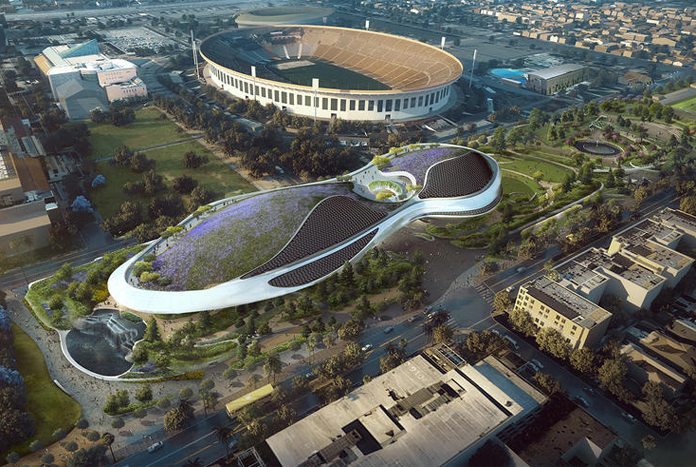
The website Artnet.com recently spent some time speaking with Don Bacigalupi, the director of the Lucas Museum of Narrative Art, about what attendees can expect to see at the museum once its doors officially open to the general public a few years from now. The museum broke ground at its Los Angeles-based location back in March and was initially expected to open sometime during the year 2021. However, it appears that timetable has been pushed back a bit to 2022 instead based on the information contained in this article from Artnet.
The intro to the piece has been copied below. Head on over to their site for the full read.
After a year of planning and three proposed cities, filmmaker George Lucas’s forthcoming Lucas Museum of Narrative Art finally broke ground last month in anticipation of its 2022 opening.
It’s an exciting time for the Lucas Museum, which for years was shunted between San Francisco and Chicago—where local activists fought the project tooth and nail—before finally landing in Los Angeles in January of 2017. The museum will be located in Exposition Park, which is already home to the Los Angeles Memorial Coliseum, the California Science Center, and the Natural History Museum of Los Angeles County.
Last week the museum announced that it had purchased Norman Rockwell’s painting Shuffleton’s Barbershop (1959), one of 40 works being controversially deaccessioned by Massachusett’s cash-strapped Berkshire Museum. The sale is likely only the first of many high-profile acquisitions by the institution.
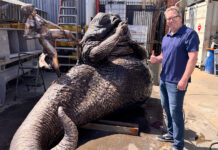
It will also feature art and artifacts from George Lucas’s personal art collection, which is heavy on 20th-century American work and Hollywood artifacts, particularly from his beloved Star Wars franchise.
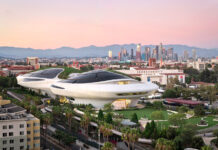
Museum designs from Ma Yansong, of the Beijing-based architectural firm MAD Architects, were unveiled in May, showing a curvaceous, spaceship-like structure that seems primed for takeoff.
We spoke with Lucas Museum director Don Bacigalupi about the building’s design, plans for the collection, and what it means to be a museum of narrative art. Here are seven take-aways from the conversation.