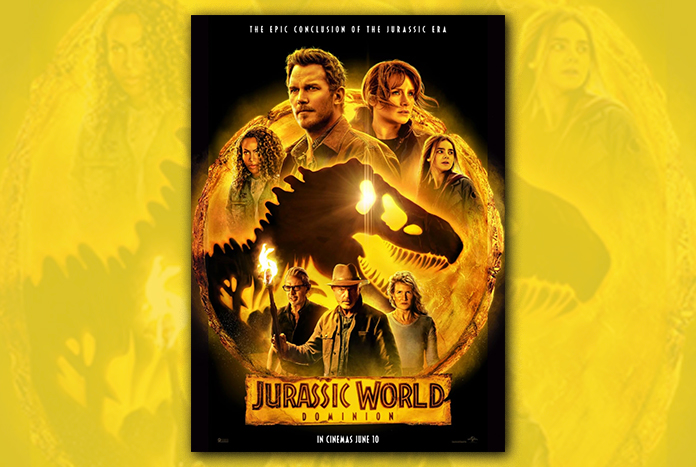
Fortune has revealed that NBC Universal has taken Disney’s title of making the most expensive movie of all time, with Jurassic World: Dominion costing more than Star Wars: The Force Awakens, according to analysis of recently filed financial statements.
The filings show that Universal Pictures spent $658.8 million making the 2022 action-adventure pic “Jurassic World: Dominion,” surpassing the previous record-holder, Disney’s 2015 “Star Wars” reboot “The Force Awakens” which cost $638.9 million. Universal and Disney have been contacted for comment.
“Dominion” was the third film in Universal’s “Jurassic World” series, and it united its stars Bryce Dallas Howard and Chris Pratt with Lara Dern, Jeff Goldblum, and Sam Neill, who headlined the original “Jurassic Park” trilogy.
Filmed at the peak of the pandemic in 2020, Universal had to adopt costly safety protocols during production. It also faced months of delays which pushed the premiere of the movie back by a year to June 2022.
Maintaining productions in a state of readiness during the downtime caused studios’ costs to surge as they had to continue paying for soundstages and leased equipment, which could not be returned without risking losing the access window to it. Furthermore, some security staff had to be paid to watch over sets. And so did some high-level producers and department heads, to ensure they remained available when the pandemic receded.
The A-list cast didn’t slum it during their five-month quarantine period, either. The stars were holed up in Marriott’s opulent Langley Hotel in the U.K., near where Dominion was filmed at the historic Pinewood Studios. An 18th-century manor, the Langley’s wood-panelled lounge is home to an elegant piano which featured in viral social media videos during lockdown as Goldblum played old-school jazz songs while Neill sung alongside him. Rooms at the hotel cost more than $600 a night, big enough to impact Universal’s bottom line for the film.
The exact cost of making movies in the U.S. is usually a closely guarded secret. Although the “budget” for a movie may leak, the fully itemized costs are combined in disclosures to the SEC, thiys hiding costs for individual movies.
It’s a different story in the U.K., where “Dominion” and “The Force Awakens” were both made.
Studios filming in the U.K. benefit from the government’s Audio-Visual Expenditure Credit (AVEC) which gives them a cash reimbursement of up to 25.5% of the money they spend there, as an incentive for foreign studios to use British talent and locations.
But the cash comes with a catch.
To qualify for the reimbursement, a movie must pass a points test proving its worth to the U.K. The test is based on factors such as how many of the lead actors are from the U.K., the amount of U.K. content, and how much filming was done in the U.K. It explains why scenes in “Dominion” were shot in the woods of south-east England, while Wolfson College at Oxford University doubled for the headquarters of the Biosyn Corporation that cloned some of the dinosaurs in the film. Likewise, Universal’s points tally was helped by the presence of British actress Isabella Sermon, who plays the cloned girl at the heart of the movie.
In addition, at least 10% of the core costs of the production need to be incurred in the U.K. In order to demonstrate this to the government, studios set up a separate Film Production Company (FPC) there for each picture. The FPCs have to file financial statements which shine a spotlight on everything from the headcount and social security payments of the staff to the amount of reimbursement banked by the studio and the total cost of the production. It takes a bit of detective work to get to the bottom of it.
The FPCs usually have code names so they don’t raise attention with fans when they file for permits to shoot on location. Dominion was thereby made by Universal’s subsidiary Arcadia Pictures, named after a rescue ship that carried the dinosaurs to safety in the previous film, “Jurassic World: Fallen Kingdom,” also shot in the U.K.. The FPC behind that movie was called Ancient Futures, in a nod to the cloning process which created the creatures.
The financial statements are filed in stages, starting during pre-production and going on long after the premiere to give the company time to collect all of its bills and receive the money for them. The latest set for Arcadia Pictures were filed this year and show that during the year to December 31, 2024, the company’s costs came to $74.9 million (£59.6 million) bringing the total to $658.8 million.
One of the biggest single costs was paying the staff which peaked at an average of 454 monthly employees. That doesn’t include freelancers, contractors, and temporary staff—they aren’t listed on the books of British companies even though they often represent the majority of workers on a film shoot. Universal paid $36.2 million (£27.5 million) to staff working on “Dominion” in addition to spending on U.K. services such as security, equipment hire, transport and catering.
This economic impact justifies the cost reimbursement, which came to a total of $127.8 million (£99.5 million) bringing Universal’s net outlay on the movie down to $531 million.
Read the article in full here.