Lucas Seastrom, writing at ILM.com, talks to ILM’s Andrew Roberts who worked as visual effects supervisor on The Creator, practically a one-man operation as he joined director Gareth Edwards and crew in Thailand and the United Kingdom.
Industrial Light & Magic visual effects supervisor Andrew Roberts was already a fan of writer/director Gareth Edwards when the opportunity to work on The Creator came knocking. In 2022, Roberts would join the crew on location in Thailand as ILM’s onset visual effects supervisor. Edwards had organized a streamlined team to work quickly and efficiently.
“Originally, Gareth explained that he was hoping for it to be a small team, maybe six vans driving around Thailand,” Roberts tells ILM.com. “His hope was that we’d see a location, jump out and film it. There might not be time to capture all of the typical reference material and photography that you normally would, but we’d get certain things before moving on to the next location. It was quite a guerrilla, lightweight, indie approach.”
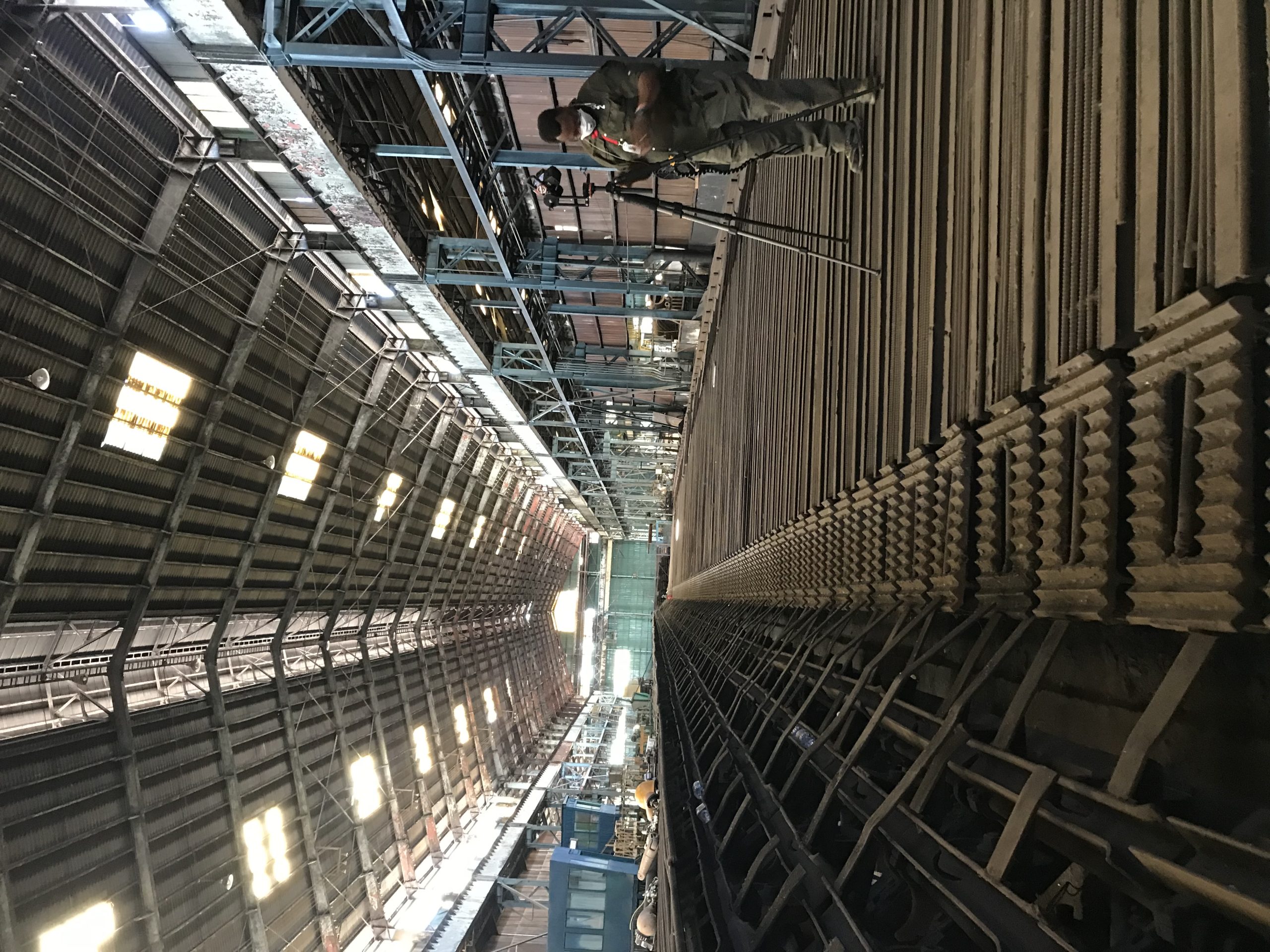
Although The Creator did require more infrastructure than Edwards’ dream of a six-van guerrilla unit, the principle remained the same, and Roberts was the only visual effects representative onset. “There wasn’t the typical visual effects support where you have someone focusing on HDRIs, and a wrangler keeping track of the data, and a coordinator,” explains Roberts. “I would fulfill all of those responsibilities. For anything onset, I’d be there to advise and give recommendations to Gareth. But then at the same time, I was also trying to capture as much information as I could to provide a snapshot for the visual effects team. I recorded the lens, distance from the characters, lighting conditions and so forth.
“I spoke to [ILM chief creative officer] John Knoll before I went onset,” Roberts continues, “and he discussed his experiences on Rogue One [Edwards’ previous collaboration with ILM]. He said it would be lean, pretty indie-style, and you won’t get everything. So be prepared to accept that and trust that the team will be able to execute the shots and use whatever you can gather for them. That was reassuring, though obviously I agonized and wanted to get everything. But I had to let things go. My primary role was to be there for Gareth and make sure he had the support he needed.”
Admittedly, it was a lot to manage, but an assignment that kept Roberts constantly engaged with the director, cinematographers Greig Fraser and Oren Soffer, and other crew members from departments as varied as makeup and special effects. And his work continued with the end of each shooting day.
“Each night I’d transfer everything into a folder structure that listed the relevant information for each image,” Roberts says. “There were prop scans, weapons, environments, vehicles, locations, even just a plate behind an actor. It was all organized. So when I returned to L.A., I cleaned it up so that it could work inside ILM’s structure and enable people to easily find the information.” Using FilemakerPro for his information structure, Roberts had captured some six terabytes of reference single-handedly over the course of production, which wrapped around May of 2022.
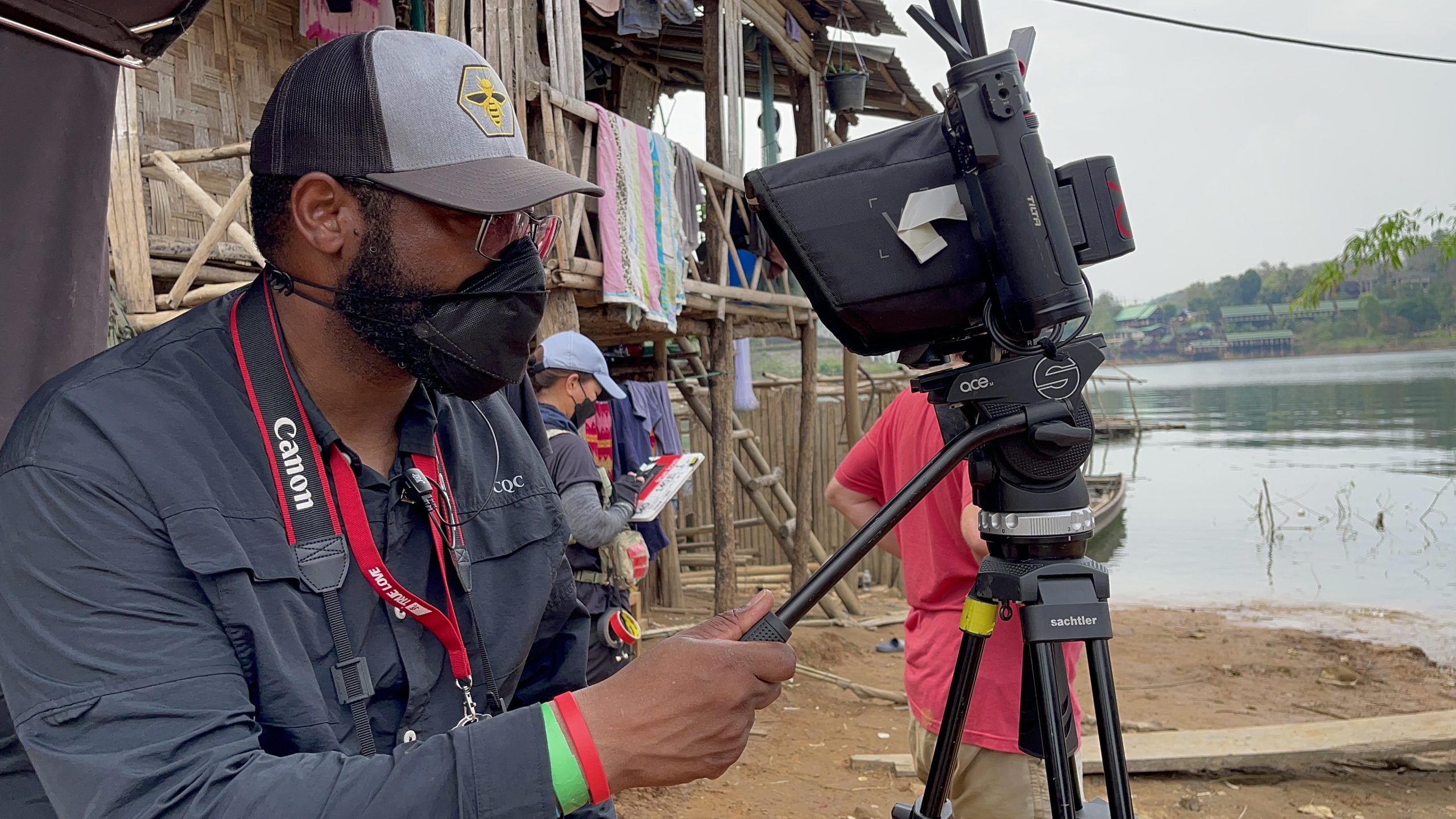
Before starting on The Creator, Roberts had a long career in visual effects across film and television, including stints at Pixomondo, Scanline VFX, and Digital Dimension, among others. He joined ILM to work on Obi-Wan Kenobi (2022) as part of the ILM StageCraft virtual production team. He’d also done onset work for projects like Babylon (2022), Haunted Mansion (2023) and Killers of the Flower Moon (2023). It was during his work on Mansion that he began preparation for The Creator. “Knowing that I was going to be the only visual effects person onset, observing the Haunted Mansion team was really helpful,” Roberts says. “They were very efficient. I watched them, asked questions and took lots of notes. They were doing a lot of shooting in low light, which I knew would also be the case for The Creator. I was able to learn which settings worked well, particularly when capturing HDRI’s.”
As was the case with the ILM crew in general, one of Roberts’ earliest concerns was how to tackle the full-body replacement of live actors with artificially-intelligent robots. “Integrating photoreal robots seemed to be the biggest challenge,” he explains. “There were storyboards, but Gareth didn’t want anyone to get pigeon-holed in following them. They were aspirational, a general sketch. We’d ultimately find the shot on the day. Actors would be fulfilling the roles of these robots, and they needed to be removed from the footage, and replaced with digital robots. In environments where there is a lot of smoke, that can be really difficult. The convincing integration of the robots was something I was talking to [visual effects supervisor] Jay Cooper about a lot.”
Production designer (and former ILM concept artist) James Clyne worked with Edwards throughout production to revise the look and mechanics of both the full-body A.I. robots and simulants. The latter – A.I. beings who appear human, save for a bundle of gadgetry at the back of their heads – were another key challenge for ILM, in particular for Roberts onset. “We only had a sketch of what the mechanics in the simulants’ heads would eventually look like,” he notes. “It was also described in the script, how it would reflect the character’s emotions. How to track where that geometry sat and ensure it was convincingly integrated was another thing we spent time thinking about how to achieve.”
Edwards was unwilling to let his actors be covered in elaborate tracking markers, especially in the case of Madeleine Yuna Voyles, a child actor who plays the central character, Alphie. “The makeup department assisted me with the placement of just a handful of subtle tracking dots,” Roberts explains. “We thought about creating a template so that the marks would be in the same position for everyone. But because the actors were different sizes, it was more about just observing the individual and placing the dots where it worked best for them. That was a daily process whenever there was a simulant on the call sheet.”
Of less concern were a number of traditional, hard-surface sci-fi elements including tanks, aerial vehicles, and environments which the ILM team would incorporate into plates captured on location. “That’s ILM’s bread and butter,” as Roberts says. “Based on James Clyne’s designs, we’d end up with beautiful shots.” Among these was an elaborate sequence when a large American tank attacks a village along with a mix of supporting vehicles and soldiers, including automated bombs programmed to run into the enemy fray and detonate.
“The tank battle was a situation where I was able to assist,” Roberts points out. “We had storyboards that described eight to ten-feet tall bomb robots. There was a stuntman, and we found a pole that was about five feet tall. We strapped it to his upper body so it was sticking out above his head, making him closer to ten feet. Gareth could frame for the larger character. We also added some tracking marks to the stuntman’s limbs in case we needed to track his movement. We didn’t know if the robot would be running like a person or a dog. The animation team ended up developing a great run.”



Read the interview in full here, and stream The Creator on Disney+ now.